How ANC and EQ Interact for Better Sound
By Larsen Okoye • 15th Feb
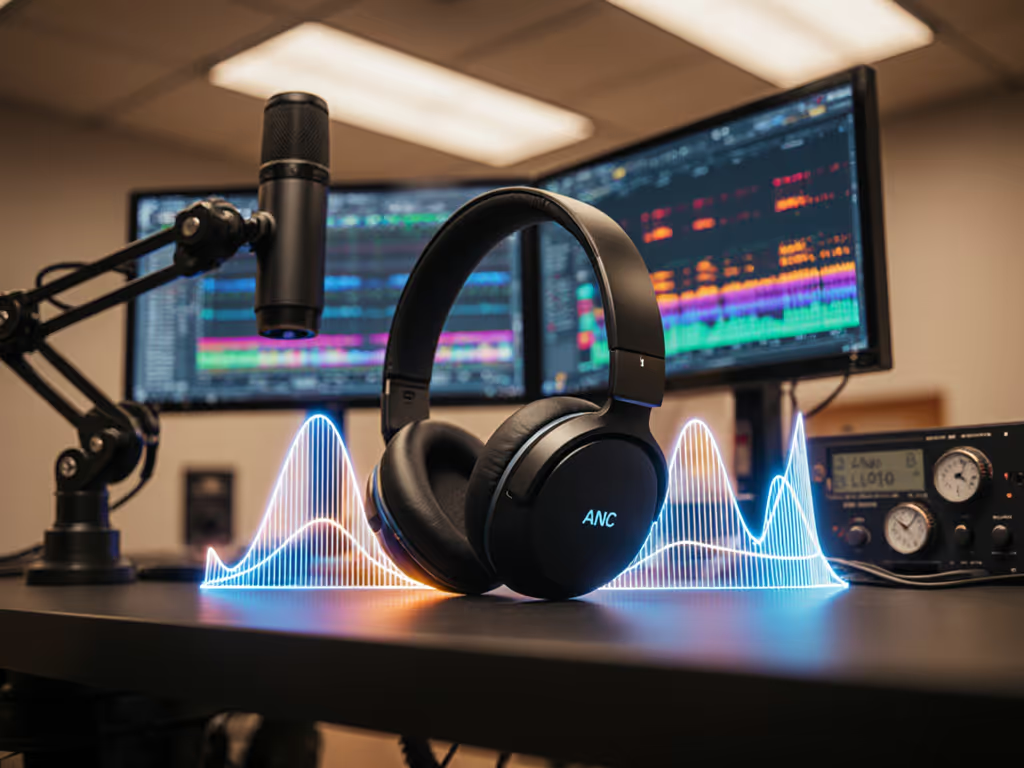
When ANC and EQ interaction works well, you stop hearing the office hum and start hearing clarity. When it works poorly, you end up with either overboosted highs ringing in your ears or a flat, dampened soundscape that makes focus harder, not easier. Understanding how noise cancellation equalization operates (and how the two signal chains influence each other) is the difference between a device that exhausts you over eight hours and one you forget you're wearing.
The relationship between ANC and EQ is not intuitive. Most listeners assume they operate independently: ANC handles the rumble, EQ handles the tone. In reality, they compete for the same acoustic real estate, and tuning one directly changes how the other performs. This guide walks you through that interaction, answering the questions that matter for your daily work and travel.
What Exactly Is Happening When ANC and EQ Work Together?
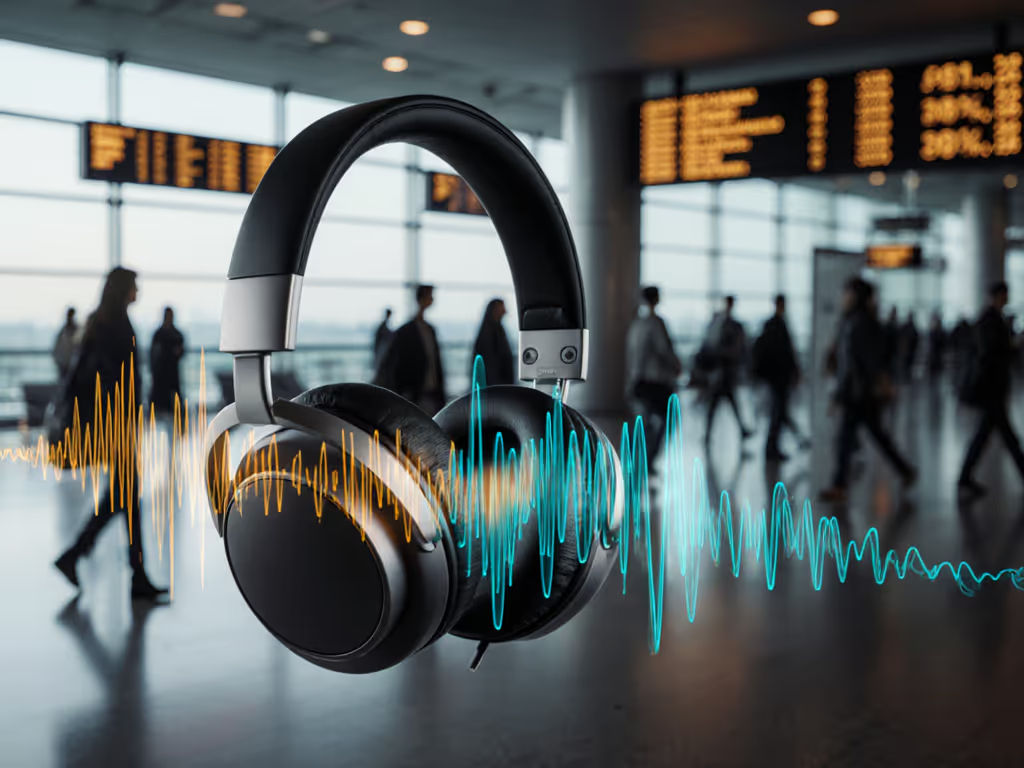
Active noise cancellation works by capturing ambient noise through microphones, then generating an inverse sound wave (180 degrees out of phase) that combines with the incoming noise to cancel it out via destructive interference.[1][5] That canceling signal travels through the same audio processing chain as your music or calls. Equalization, meanwhile, shapes the frequency response of everything passing through your device: music, voices, and yes, the residual noise that ANC doesn't fully eliminate.
The ANC processing signal chain matters because the order of operations determines what you hear. Most devices process ANC first (capturing and inverting ambient noise), then layer EQ on top of the combined signal. This means your EQ settings are sculpting not just your music, but also the sonic character of the noise floor left behind after ANC has done its work.
Think of it this way: if ANC reduces a low-frequency office rumble by 20 decibels, and you then apply a bass-heavy EQ curve, you've amplified the remaining rumble and boosted your music's low end. The result feels powerful in the moment, but it can mask subtle background noise and, over hours, create listening fatigue.
Why Does My ANC Sound Different Depending on the EQ Setting?
The short answer: you're hearing residual noise being recolored by EQ, not the EQ reshaping pure music in isolation.
ANC isn't perfect. It excels at low-frequency hums (the 60-200 Hz range where office HVAC, airplane engines, and subway rumble live).[1] For environment-by-environment results, see our frequency-specific ANC guide. But higher frequencies, like voices, keyboard clicks, or mechanical squeaks, slip through because the DSP chip can't process them quickly enough to generate an effective canceling wave.[1] When you select a bass-forward EQ preset, you're adding volume to frequencies where ANC already worked hard, while the uncanceled mid and high frequencies remain prominent. The soundscape becomes bottom-heavy and unbalanced.
Conversely, a treble-boosted EQ can make residual sibilance and office chatter feel more piercing, even though ANC is technically doing its job. This is why sound signature optimization often means restraint rather than aggressive sculpting. For a deeper look at trade-offs between cancellation and fidelity, read ANC's hidden cost.
How Do I Choose the Right EQ Profile for My ANC Device?
Start with what you're actually hearing, not what you think you should hear. Spend 20 minutes in your target environment (plane cabin, open office, subway) with ANC on and EQ set to neutral. Notice which frequencies are still prominent. Is it a low rumble? Voices? Rustling? Write it down.
Then, apply a modest EQ adjustment targeting only the residual noise. If office chatter is still audible, a slight dip at 3-5 kHz can reduce its prominence without sacrificing vocal clarity in your music. If engine rumble persists, resist the urge to boost bass; instead, try a gentle cut in the 100-200 Hz range to prevent that remaining energy from fatiguing your ear.
The principle: custom sound profiles with ANC work best when they're subtractive, not additive. Cutting problematic frequencies is gentler on your ears and more effective than amplifying desired ones, especially during long-session wear.
How Does ANC Comfort Connect to How I Tune EQ?
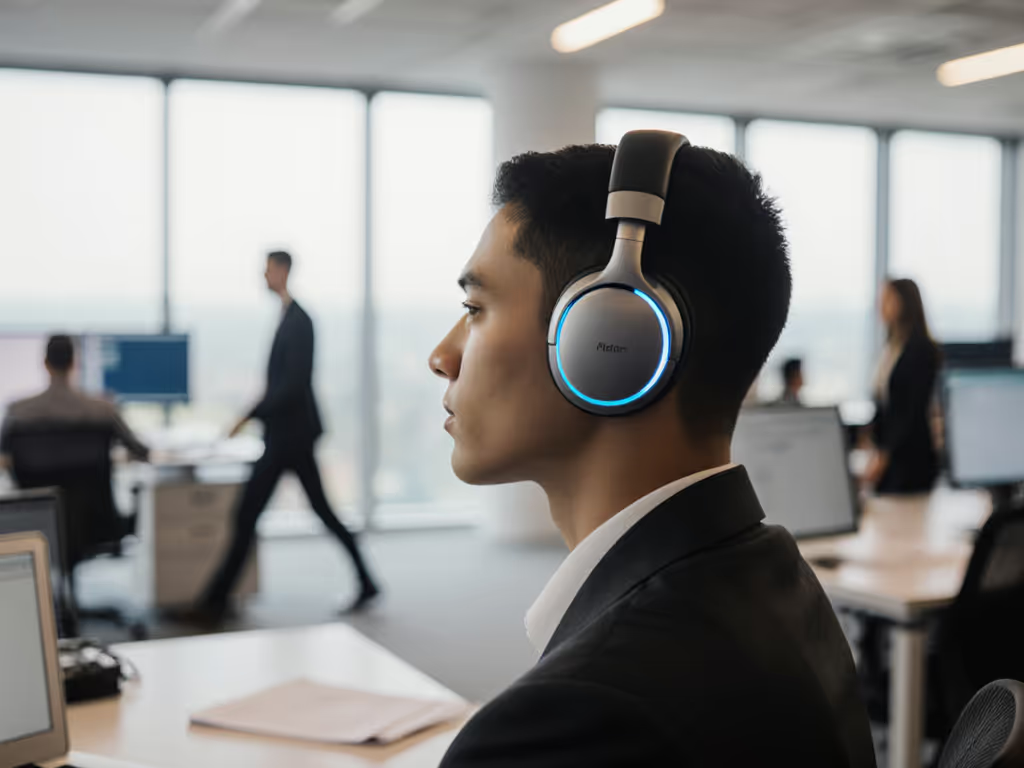
This is where the invisible part of the equation matters. After a ten-hour office day under relentless HVAC roar, my temples throbbed from clamp force while my ears rang from overboosted highs I'd cranked to escape the noise. The fix wasn't a better EQ curve (it was switching to a device with lower clamp force, a stable seal, and listening at safer levels). I finished the week without fatigue, proof that comfort and safety amplify focus in ways an algorithm cannot.
When ANC is tuned well and EQ is restrained, you listen at lower absolute volumes. The Environmental Protection Agency does not set daily exposure limits for consumer audio, but research confirms that 85 dB for 8 hours represents a threshold of concern for hearing conservation.[2] If a harsh EQ forces you to raise volume to compensate, or if poor fit creates ear pressure that masks true volume, you've created a fatigue spiral.
Comfort you forget, protection you feel, quiet you measure. A well-matched ANC and EQ setup lets you finish your day without your ears ringing and your temples aching (not because the device is powerful, but because it's restful).
What About Bass Boost With ANC - Is That Ever a Good Idea?
Bass boost and ANC are a tricky pairing. Since ANC already attenuates low frequencies effectively, adding more bass amplification amplifies what's left in that range (mostly the leakage that ANC couldn't cancel, plus your music's low end). The result is often a boomy, imprecise low end that feels powerful but masks detail.
If you genuinely enjoy bass-forward music, apply bass boost conservatively (think 2-4 dB, not 10-12 dB), and spend at least a week at that setting across multiple environments. You'll notice whether fatigue increases. Many listeners discover they valued bass boost not for the bass itself, but because it masked uncanceled rumble; once they find the right ANC fit and seal, they no longer need it.
How Does Multipoint Bluetooth Affect This Interaction?
Switching between devices with multipoint Bluetooth can subtly alter how ANC and EQ interact because each device may store different EQ profiles, and the ANC algorithm may adapt slightly based on the audio codec and latency of each connection. If you're jumping between phone calls on your phone and music playback on your laptop, the residual noise floor and EQ coloration can feel inconsistent.
The workaround: standardize your EQ profile across devices, and spend a short time (3-5 minutes) in your ANC-on configuration before important calls or focus work. This lets the algorithm stabilize. If you notice one device pair sounds dramatically different from another, check whether the audio codec or ANC intensity setting has changed. Learn how Bluetooth codecs & ANC interact to change both cancellation effectiveness and audio fidelity across devices.
What's the Relationship Between Safe Listening and ANC-EQ Tuning?
Safer listening emerges naturally when you stop chasing aggressive sound. A device with excellent ANC means you don't need to boost your EQ or raise volume to escape ambient noise. A restrained EQ profile means you're not fatiguing your ears with unnecessary peak energy. Over an 8-10 hour workday, the cumulative effect is measurable: no tinnitus spike, no post-work ear fatigue, better afternoon focus.
This is where audio tuning with noise cancelling becomes a wellness practice, not just an audio preference. You're not optimizing for loudness or bass impact; you're optimizing for sustainable, unforced clarity.
Further Exploration: Next Steps
-
Measure your current listening behavior. Use a phone decibel meter in your key environments. Are you listening above 85 dB regularly? If yes, reconsider your EQ and ANC settings before anything else.
-
Test a neutral, restraint-first EQ curve. Set all adjustments to zero for one week. Note which sounds remain prominent. Then make one surgical cut (2-3 dB maximum) per week, focusing only on residual noise.
-
Verify fit and seal. Poor seal undermines both ANC and your ability to hear safely. Spend 10 minutes repositioning earcups or trying different ear tip sizes. A stable seal often feels better than any EQ tweak.
-
Experiment across your real environments. Don't trust lab reviews or studio comparisons. For practical setup tips in varied environments, use our real-world ANC optimization guide. Test ANC-EQ combinations in the plane, office, or commute where you actually live. That's your true measure of whether the interaction is working.
Comfort and hearing safety are prerequisites for sustainable focus. When ANC and EQ align toward that goal rather than maximum loudness or bass impact, you stop noticing the technology and start noticing your work, your day, and your energy at the end of it.
Related Articles