ANC Hearing Protection Integration For Dual-Mode Safety
By Maya Takahashi • 29th May
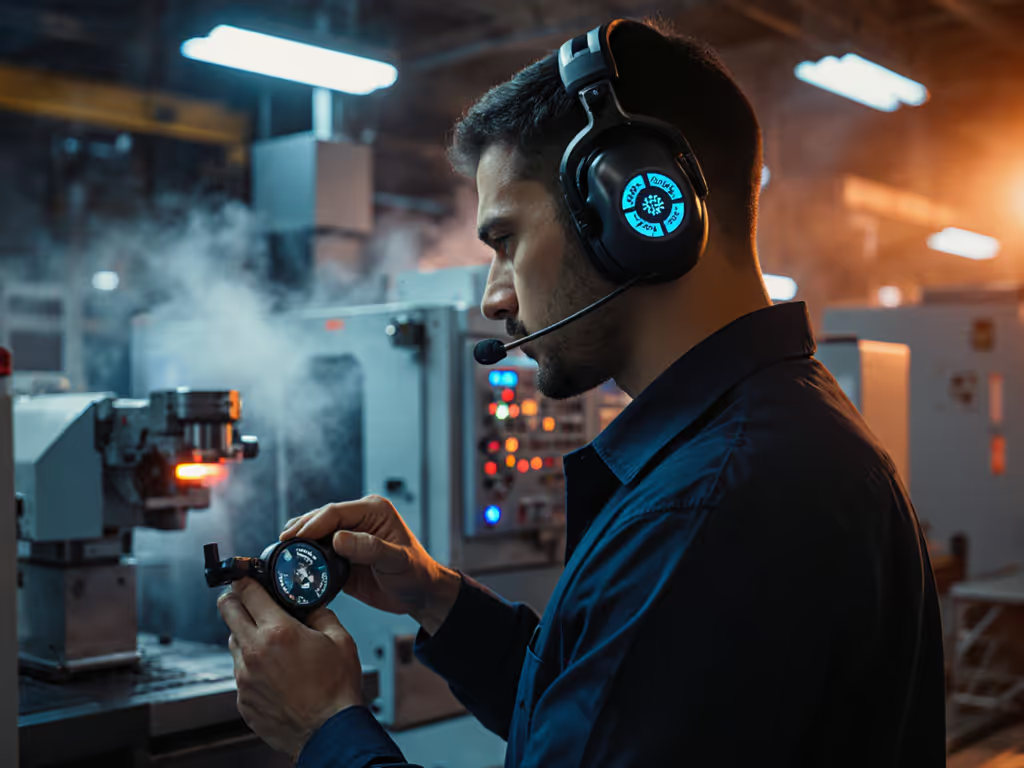
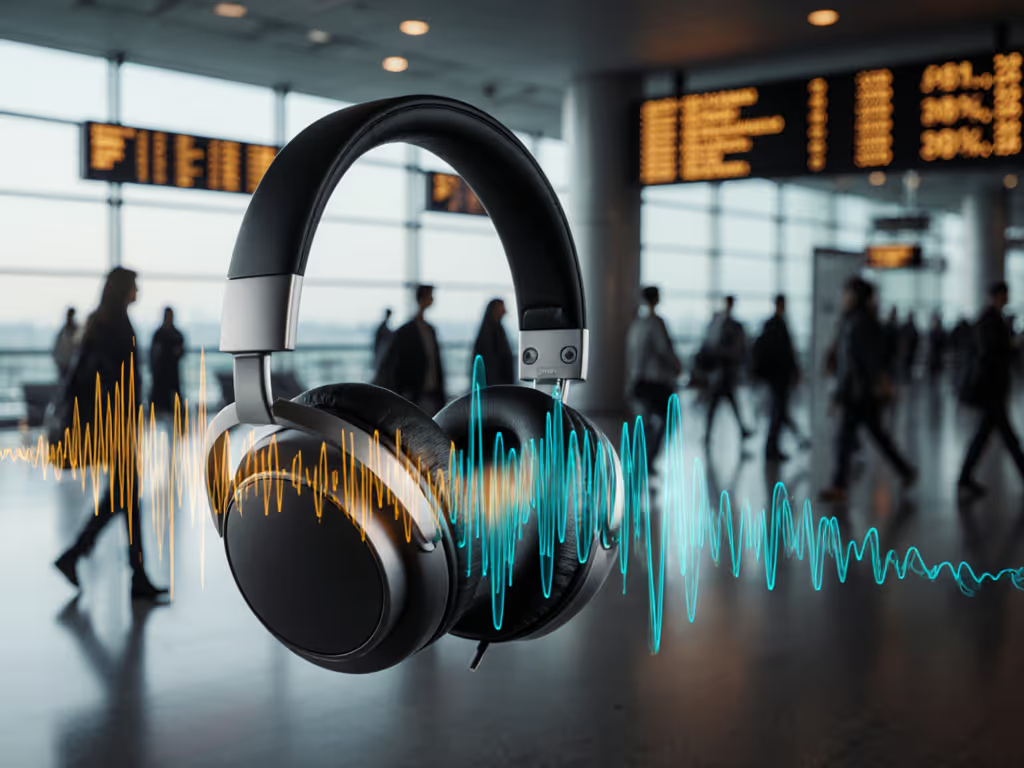
Modern ANC hearing protection integration promises a simple dream: one set of eargear that keeps you safe at work and calm on the commute, with dual-mode noise cancellation that shifts between "protect" and "focus". The reality is more complicated, but if you understand where ANC stops and true hearing protection begins, you can build a setup that protects your ears and your attention.
If it adds friction, it steals your focus and time.
This FAQ walks through how ANC and hearing protection really work together, what "OSHA-compliant dual ANC" would actually require, and how to choose hazardous environment hearing solutions that fit your day.
FAQ 1: What does "ANC hearing protection integration" actually mean?
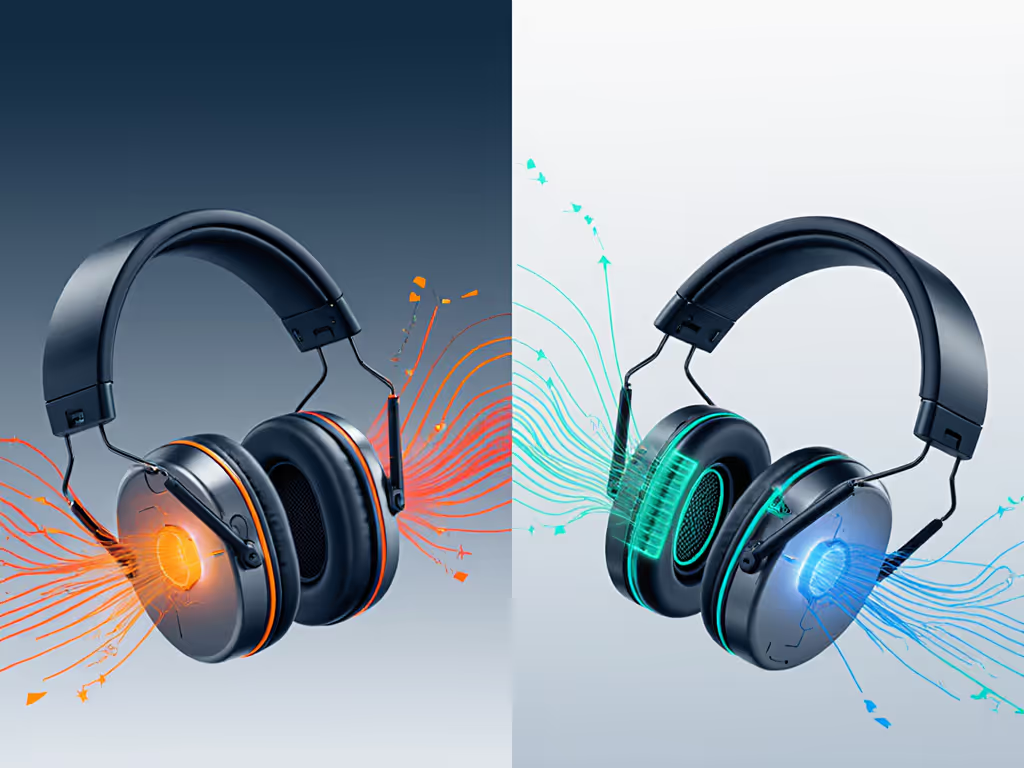
In plain language, ANC hearing protection integration means combining two separate technologies in one system:
- Active Noise Cancellation (ANC) to cut steady background noise for comfort and focus (think airplane engines or HVAC). [1][4]
- Electronic / smart hearing protection that is designed and tested to reduce dangerous sound levels to safe ranges while still letting in important sounds like voices or alarms. [1][5][7]
ANC uses microphones and an "anti-noise" signal to cancel incoming sound waves, especially low-frequency rumble. [1][4] Electronic hearing protection uses microphones and digital processing to suppress only sound that exceeds safe levels (like gunshots or power tools) while letting safe sounds pass or even be amplified. [1][5]
Integrated correctly, you get:
- A safety layer: physical and electronic protection that meets strict standards for loud workplaces. [7][8]
- A comfort layer: ANC-style reduction of constant hum and rumble for flights, offices, and commutes. [1][3]
The key is understanding that the safety layer must come from true hearing protection devices (HPDs), not consumer ANC alone. [3][4][7]
FAQ 2: Can ANC headphones replace hearing protection in loud or hazardous environments?
No. Consumer ANC headphones cannot be treated as hearing protection in genuinely loud, hazardous settings like construction sites, shooting ranges, or heavy industry. [1][3][4][7] For OSHA-specific industrial recommendations, see our industrial ANC safety guide.
Several independent sources emphasize the same point:
- ANC is designed for comfort and listening quality, not safety. [1][3][4]
- Consumer ANC typically reduces noise by about 15-25 dB, mostly at lower frequencies below 1,000 Hz. [3] That is not enough, especially for high-frequency or impact noises that cause most hearing damage. [3][7]
- True occupational hearing protectors carry a Noise Reduction Rating (NRR) label tested in accredited labs and regulated by the EPA. [7] ANC headphones do not carry this rating. [7]
- NIOSH explicitly notes that ANC headphones or earbuds should not be considered hearing protection devices unless labeled with an NRR. [7]
So, ANC can support safer listening by letting you use lower playback volumes, [2][4] but it does not replace an NRR-rated earplug or earmuff when OSHA-level noise is involved. [1][3][4][7]
If your workplace has mandated hearing protection, you still need certified HPDs, even if you wear ANC on top or under them.
FAQ 3: How does dual-mode noise cancellation work in practice?
"Dual-mode noise cancellation" usually describes gear or setups that run in two distinct operating modes:
-
Comfort / focus mode (ANC-focused)
- Target: commuting, offices, travel.
- Goal: reduce steady background noise so you can focus or listen at lower volumes. [1][3][4]
-
Protection mode (HPD-focused)
- Target: hazardous noise environments.
- Goal: reduce overall noise exposure to safe levels while preserving situational awareness, often via selective noise cancellation protection that cuts dangerous peaks but passes speech and alarms. [1][5][7]
Some smart earplugs and advanced HPDs already implement a version of dual-mode logic:
- They use microphones and algorithms to filter out harmful noise while allowing necessary sounds through. [5]
- They blend passive attenuation (physical barrier) with active processing to adapt to different sound types. [5]
In a fully integrated setup, you might:
- Use hearing safety ANC technology in an HPD-rated device during machine time.
- Switch to a more relaxed ANC profile for office work or transit, where the main goal is comfort.
Set it once; let it disappear. The less mode-fiddling you do, the more likely you'll keep protection on when it matters.
FAQ 4: What makes a system "OSHA-compliant dual ANC" instead of just fancy headphones?
For anything marketed as OSHA-compliant dual ANC, you should look for the same fundamentals as any hearing protection device, plus clearly documented active features:
-
Noise Reduction Rating (NRR) on the packaging
- This rating shows the average sound reduction measured in standardized lab tests. [7]
- Higher NRR = greater potential attenuation, when fitted correctly. [7]
-
Explicit positioning as hearing protection, not just headphones
- Materials should emphasize compliance with occupational noise exposure requirements, not just "great ANC". [1][7]
-
Clear description of dual-function behavior
- How the device behaves in continuous noise vs impact noise.
- How it preserves speech and alarms while capping dangerous peaks. [1][5]
-
Documented fit instructions and limitations
- Even the best device fails if worn loosely or incorrectly. [8]
From a safety standpoint, OSHA cares about dose over time (how much noise your ears actually receive across the shift), not about whether you own something labeled "ANC". True OSHA-oriented systems start from certified HPDs and then add ANC-like electronics on top, not the other way around. [1][7][8]
FAQ 5: What is "selective noise cancellation protection," and why does it matter?
Selective noise cancellation protection is the core idea behind many smart earplugs and electronic earmuffs:
- The device uses microphones and algorithms to differentiate between types of sound. [5] If the terminology is confusing, learn how ANC vs ENC differ and when each matters.
- Harmful noise (e.g., gunshots, power tools, sudden blasts) is reduced or clipped to safer levels. [1][5]
- Lower-level, useful sounds - voices, alerts, environmental cues - are allowed through or even amplified. [1][5]
This has two big benefits in hazardous settings:
- You stay protected from damaging peaks and sustained loudness. [1][5][8]
- You stay connected enough to communicate and detect warnings. [1][5][8]
A systematic review of hearing protection devices found that HPDs can provide strong attenuation while not significantly reducing sound localization or speech perception overall. [8] Active approaches, similar in spirit to selective ANC, can provide substantial benefits for speech recognition, especially for some users. [8]
If your work depends on hearing instructions, alarms, or moving vehicles, this balance is critical.
FAQ 6: How should I combine ANC and hearing protection across my day?
You want one predictable pattern, not a dozen toggles. Think in environments:
A. Loud, hazardous work (construction, shop floor, shooting, heavy tools)
- Non-negotiable: use certified HPDs with an NRR rating appropriate for your noise levels. [7][8]
- If available, choose electronic HPDs that offer selective attenuation so you can still hear speech and alarms. [1][5]
- Treat any extra ANC (for comfort) as a bonus, not the safety layer. [1][3][4][7]
B. Moderate noise (open offices, server rooms, cafes, aircraft cabins)
- Here, ANC shines: it reduces ambient noise so you can listen at lower volumes and maintain focus. [1][2][3][4]
- This can indirectly protect hearing by avoiding the temptation to "crank it" to overcome noise. [2][4]
- Watch for discomfort: some people experience ear pressure or fatigue with strong ANC; take breaks.
C. Transitions and mobility (walks, platforms, crossing streets)
- Use transparency / ambient modes or remove deep-sealing plugs so you can hear vehicles and announcements. For practical strategies on staying aware while moving, see our situational awareness with ANC guide.
- For industrial sites, rely on selective electronic protection rather than fully blocking awareness. [1][5][8]
A simple rule: protection first where noise is clearly hazardous; ANC first where noise is just distracting.
I've seen more than one person return "broken" headsets when a single buried setting was silently disabling ANC in the very conditions they bought it for. Clear modes and simple defaults matter more than you'd think.
FAQ 7: Do ANC and electronic hearing protection prevent hearing loss on their own?
Here's the nuance:
- ANC headphones alone are not hearing protection devices and should never be used as such. [3][4][7]
- They can reduce ambient noise and make listening easier, which helps you keep volume at safer levels (typically in the 60-75 dB listening range recommended by many hearing specialists). [2][4]
- Certified HPDs (earplugs, earmuffs, smart earplugs) have been shown to be effective at reducing noise exposure and protecting hearing when used correctly. [7][8]
A systematic review concluded that HPDs perform well for their primary function (sound attenuation) without significantly harming speech communication or localization in most conditions. [8]
For long-term hearing safety, combine:
- Certified attenuation in truly loud environments. [7][8]
- Volume control + ANC in everyday environments so you avoid chronic overexposure. [2][4]
- Regular breaks from any headphone use, even at moderate volumes. [4]
FAQ 8: How do I evaluate hazardous environment hearing solutions without getting lost in marketing?
When everything claims "advanced ANC" or "pro-grade protection," use this checklist:
-
Look for NRR, not just dB claims
- "NRR 25 dB" on packaging means it has passed standardized attenuation tests. [7]
-
Separate comfort tech from safety tech
- Ask: "Which part of this product is actually certified hearing protection?" [1][7]
-
Clarify use cases
- Is it sold for industrial / shooting / occupational use, or just commuting and office focus? [1][3][7]
-
Ask about speech and awareness
- Does it offer selective noise control or smart filtering so you can still hear speech and alarms? [1][5][8]
-
Fit and wearing time
- Even a high-NRR device underperforms if you take it off for comfort repeatedly. [8] Comfort is part of safety.
If you're in a regulated environment, check with your safety officer or occupational health team before relying on any new device.
FAQ 9: How can I reduce friction so I actually use protection and ANC every day?
The best system is the one you don't have to babysit. To make your own dual-mode noise cancellation setup truly usable:
-
Pre-define modes by place
- "Shop mode": electronic HPD on, full protection profile.
- "Desk mode": ANC on, moderate level.
- "Street mode": transparency on, or HPD disengaged.
-
Minimize taps and toggles: use presets or profiles where possible, so you're not guessing mid-shift.
-
Keep one rule per environment: for example, "Machines on = HPD in. Period."
-
Check fit as routinely as you check PPE: comfort adjustments are still PPE maintenance.
Set it once; let it disappear. The more predictable your system, the more your brain can focus on work, not on managing modes.
Where to go next
If you work around loud noise, start by mapping your day: which hours are truly hazardous, and which are just distracting? Use certified HPDs for the former, and ANC-based comfort tools for the latter, layering in hearing safety ANC technology only where it sits on top of real protection, not instead of it. [1][3][4][7]
From there, explore OSHA-compliant dual ANC options and smart earplug-style devices that promise selective noise cancellation protection, and always verify their NRR and intended use. [1][5][7] To match protection and comfort to your actual noise environments, use our frequency-specific ANC guide. When in doubt, involve your safety officer or an audiologist; they can help you turn a confusing feature list into a simple, low-friction routine that guards both your hearing and your attention.