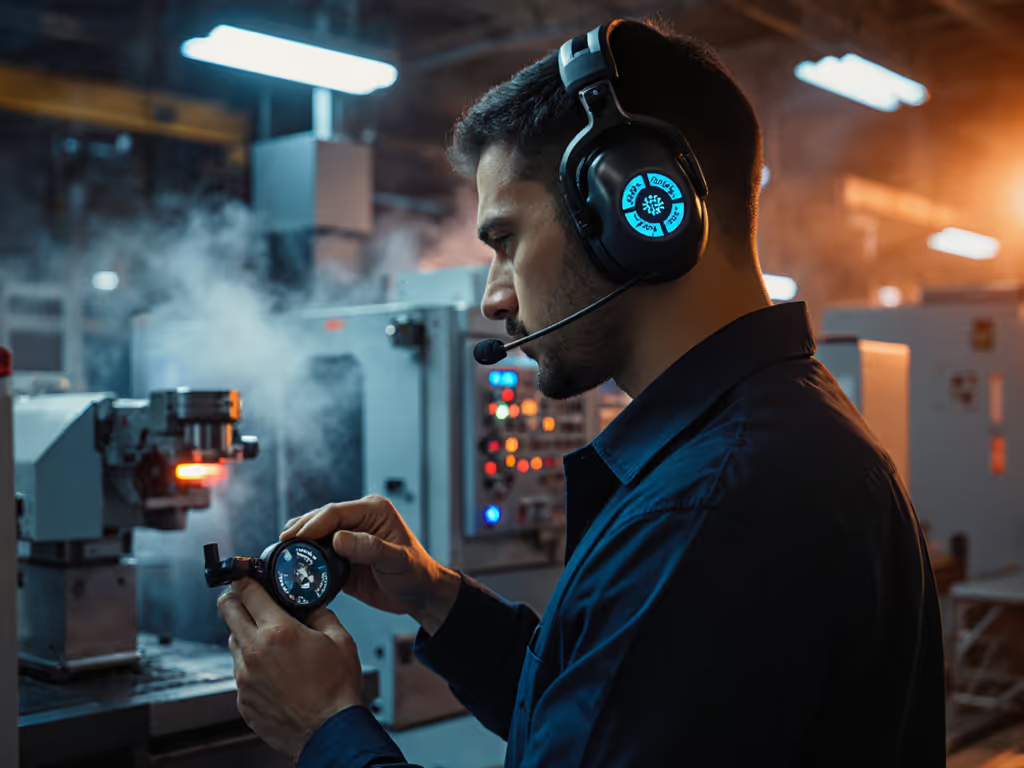
Feedforward vs Feedback ANC: Microphone Placement Matters
By Larsen Okoye • 3rd Mar
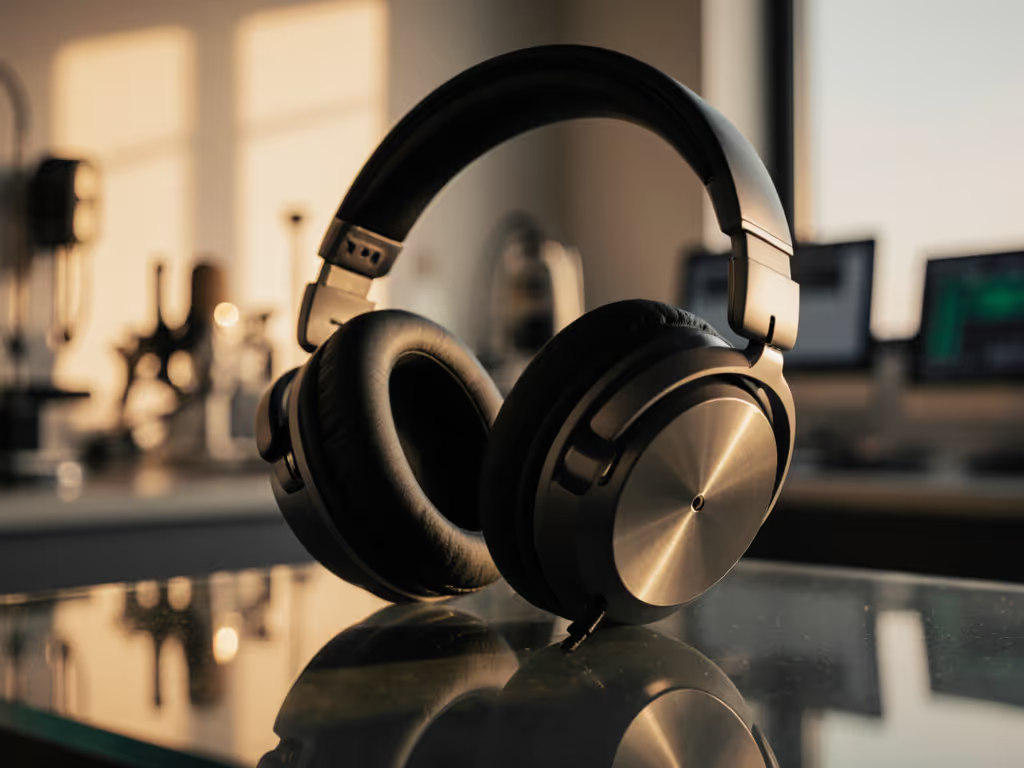
The difference between feedforward and feedback ANC comes down to a single, consequential decision: where the microphone sits. That placement choice determines which frequencies your headphones can quiet, how well they handle wind, how they respond to your specific work environment, and, though rarely discussed, how much listening fatigue you'll experience during long sessions. Understanding this isn't just technical trivia; it's the key to finding a setup that works reliably where you actually live and work.
How Microphone Placement Shapes Noise Cancellation
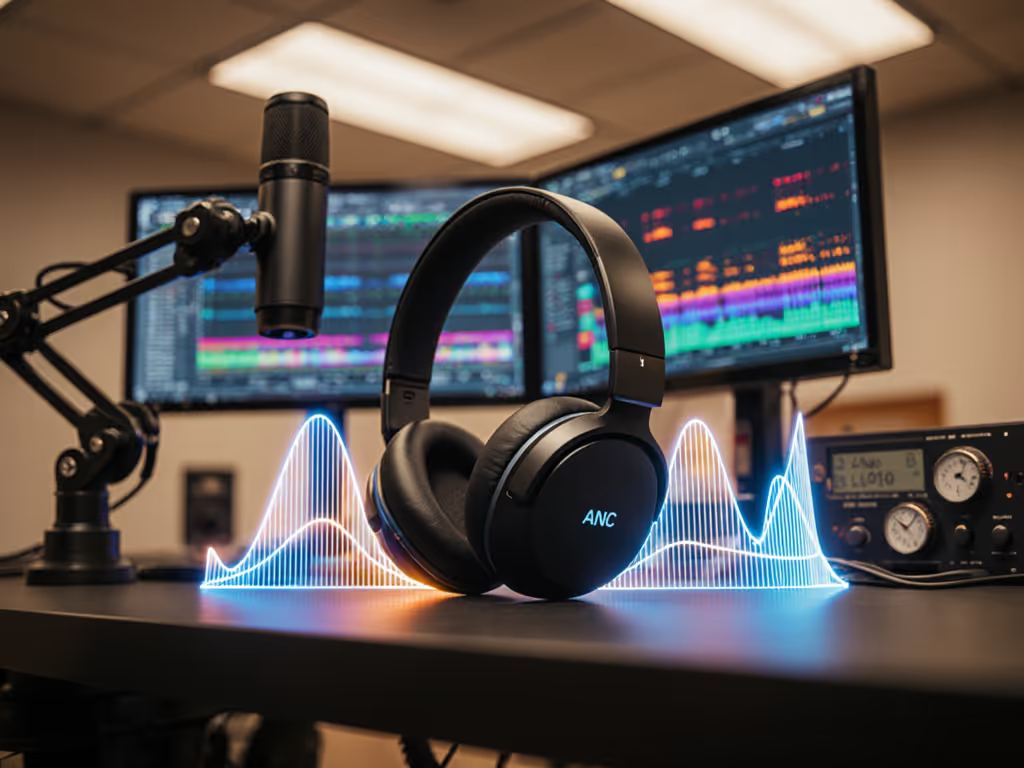
Active noise cancellation works by creating an inverse sound wave (a kind of audio mirror) that cancels out incoming noise through destructive interference. The science is elegant. But the real performance depends entirely on what the microphone hears, and when it hears it.
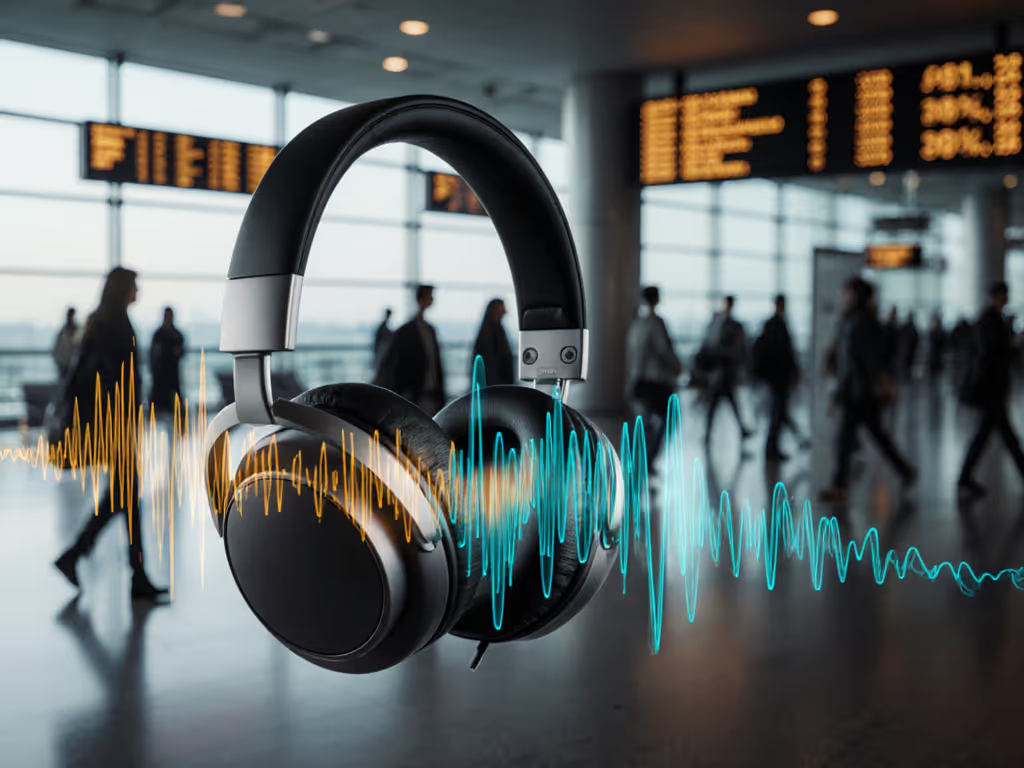
Feedforward ANC places the microphone on the outside of the ear cup. This is the most common approach. The mic picks up ambient noise before it reaches your ears, giving the processor valuable lead time (milliseconds that matter when generating the anti-noise signal). This early detection makes feedforward ANC particularly effective at reducing steady, predictable low-frequency rumble: aircraft engines, HVAC systems, subway rails, traffic hum. For anyone working in a consistent noise environment, this strength is profound.
The trade-off emerges with unpredictable, high-frequency sounds. Wind gusts, sudden traffic horns, screeching brakes, nearby conversation: these fast-changing noises can overwhelm an external microphone. The system can't always keep pace, and in extreme cases, those impulses may actually get amplified rather than canceled, creating an uncomfortable flutter or hiss.
Feedback ANC moves the microphone inside the ear cup or deep inside your ear canal with earbuds. This mic sits almost exactly where your eardrum is, so it hears what you hear in real time. The processor then corrects on the fly, moment by moment. This real-time adjustment handles sudden, dynamic noises far better than feedforward: speech, alarms, tonal shifts. The system becomes self-correcting, an advantage that also makes it more resistant to wind artifacts.
The limitation is latency and frequency range. Because the microphone captures sound after it's already reached your ear, there's less processing time available. Feedback ANC excels at mid and high frequencies but often struggles with deep, rolling low-frequency noise that has long wavelengths.
Why Hybrid ANC Systems Matter for Real-World Comfort
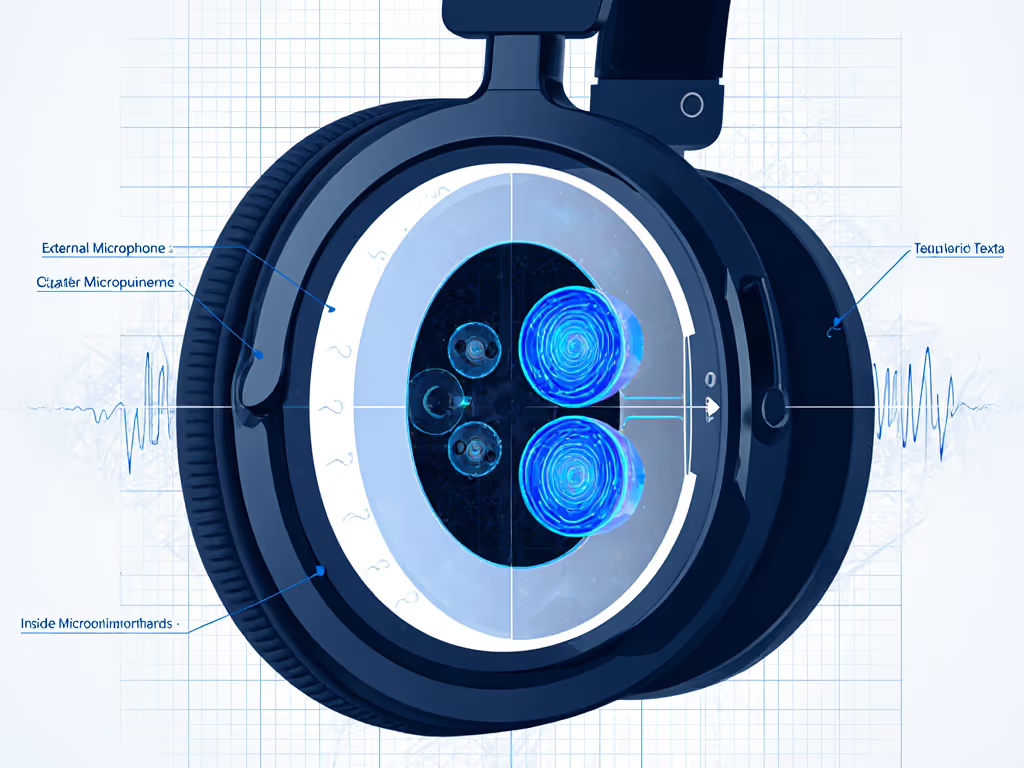
Neither approach is perfect in isolation. For a hardware-level breakdown of feedforward, feedback, and hybrid mic systems, see our ANC microphone technology guide. This is where hybrid ANC systems enter: they combine external feedforward microphones and internal feedback microphones, feeding both data streams into the processor simultaneously. The result is coverage across the entire frequency spectrum: low rumble gets canceled by feedforward detection, sudden noises get caught by feedback correction, and the system rarely produces feedback artifacts or over-amplification.
Hybrid does cost more to implement, which is why it remains less common than feedforward alone. But for anyone spending hours daily in noise-heavy spaces (airport terminals, train stations, open offices with poor acoustics, or hybrid work setups where your home office shares walls with HVAC ducts), the measurable difference in sustained focus is undeniable. You're not fighting a mix of well-canceled lows and piercing highs. You're sitting in a coherent, predictable quiet.
That stability matters for endurance. After a ten-hour workday in an office where HVAC roar competed with constant Slack notifications and keyboard clacks, I'd often finish with temples throbbing from clamp force and ears ringing from overboosted treble (a double tax on focus). Switching to a lighter setup with better seal and lower pressure, paired with headphones that used hybrid ANC, changed everything. I finished the week without fatigue, proof that when comfort aligns with protection, focus amplifies. Comfort you forget, protection you feel, quiet you measure.
Understanding Microphone Placement in Your Environment
Your daily noise landscape should guide which ANC type serves you best. To match headphones to specific noise types, use our frequency-specific ANC guide.
Choose feedforward ANC if:
- You spend extended time in steady-state noise: long flights, commutes on predictable transit routes, or offices with constant HVAC background
- You need clear call quality in those environments; feedforward mics pick up your voice crisply before ambient noise reaches them
- You want to avoid over-ear designs with internal microphones, which can feel pressurized during long wear
Choose feedback ANC if:
- Your noise environment is unpredictable: city streets, open-plan offices with spontaneous conversations, or spaces with sudden impulse noises
- You're willing to accept somewhat reduced low-frequency cancellation in exchange for better tracking of dynamic sound
- Fit and seal are already dialed in; feedback ANC depends critically on consistent positioning
Choose hybrid ANC if:
- You move between environments (commute, then office, then errands) without changing headphones
- You want the minimum viable fatigue: fewer artifacts, fewer pressure sensations, fewer reasons to remove the headphones before your workday ends
- You can afford it; hybrid systems cost more but deliver peace of mind that both frequency extremes are handled
The Comfort and Safety Link to ANC Performance
There's a tension most reviewers overlook: aggressive ANC can trigger ear pressure, tinnitus-like hiss, or a sensation of rapid pressure changes when you move your head. This is often feedback runaway (the system amplifying its own signal), or simply the processing artifacts of an ANC algorithm fighting a mismatch between microphone placement and actual ear geometry.
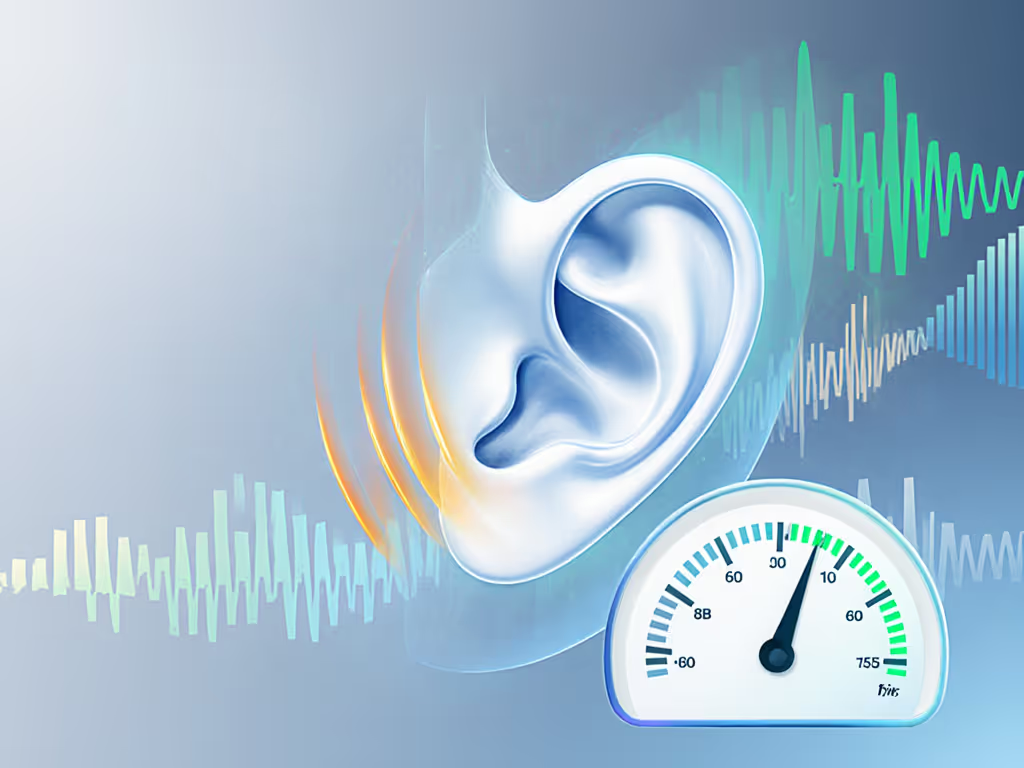
Over time, these artifacts push listeners to raise playback volume to compensate, a counterintuitive spiral that worsens hearing fatigue without improving the listening experience. Reliable ANC that stays out of the way (that doesn't hiss, doesn't induce pressure, doesn't require volume compensation) allows you to keep exposure well within safe limits. Industry data confirms most safe listening occurs below 85 dB for typical workdays; well-designed ANC gets you there without needing to crank playback. For safety facts and common misconceptions, read our ANC safety and comfort myths.
}
Choose the lightest setup that hits your noise floor reliably. Microphone placement determines whether your headphones can actually hit that floor or whether they're fighting physics and your ear shape every day.
Key Takeaways: Placement, Performance, and Endurance
- Feedforward ANC (external microphones) excels at predictable, low-frequency noise; trade-off is vulnerability to wind and impulse noise
- Feedback ANC (internal microphones) adapts to dynamic sound in real time; trade-off is weaker low-frequency reach and processing latency
- Hybrid ANC merges both, offering the broadest frequency coverage and lowest artifact risk (but at higher cost)
- Microphone placement directly affects call clarity, listening fatigue, and whether you'll comfortably wear your headphones for entire workdays
- Matching ANC type to your actual noise environment (not marketing claims) determines whether you'll feel the difference or just pay for a label
When you understand where the microphone lives and what that means for the frequencies you encounter daily, choosing headphones becomes less about brand reputation and more about prediction: Will this quiet my specific noise, all day, without grinding my ears? Microphone placement is the answer beneath the surface, and it's worth knowing.