Real-World VR Noise Cancellation: What Actually Works
By Diego Álvarez • 4th Dec
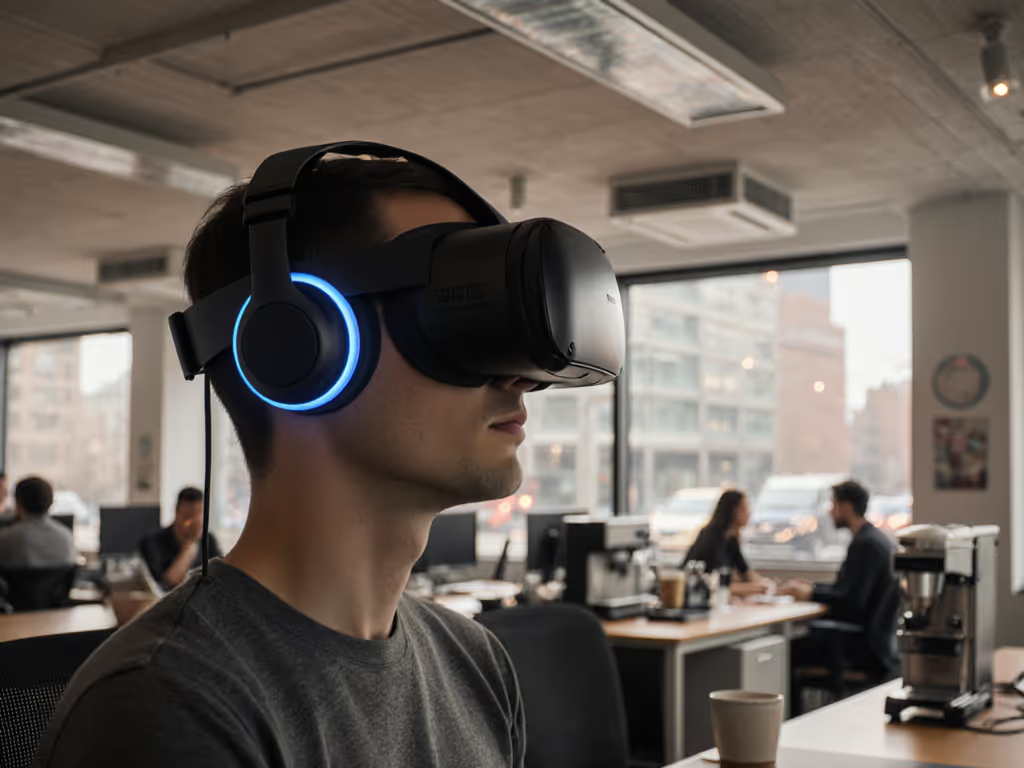
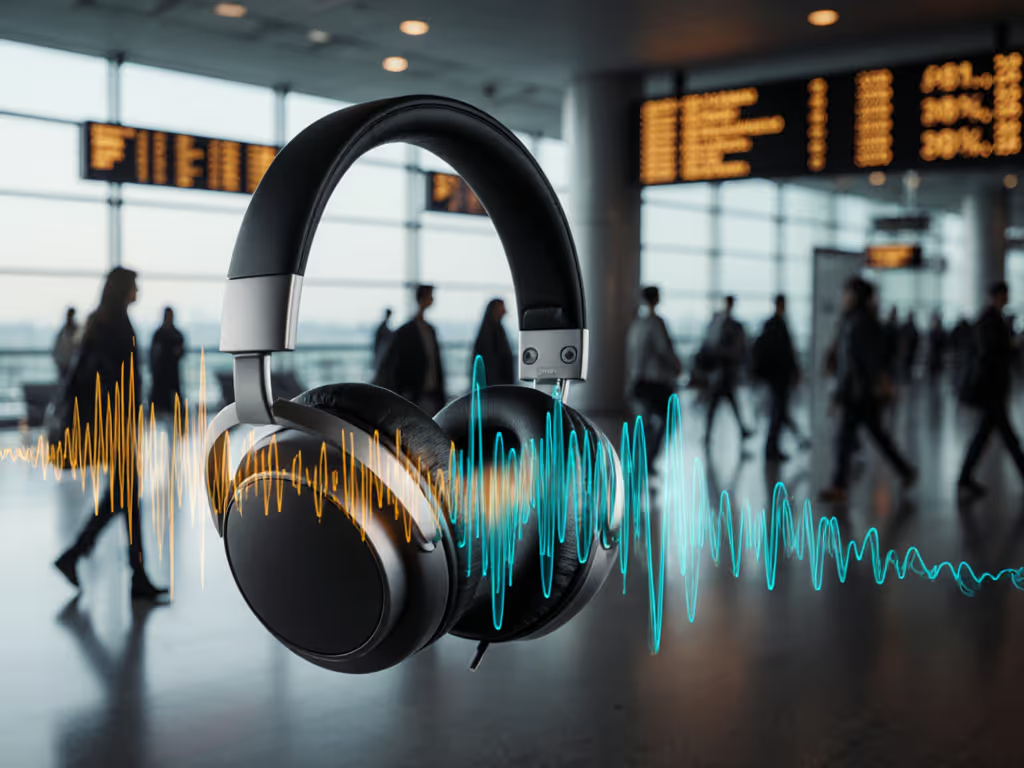
When shopping for ANC for virtual reality, you're probably drowning in lab-tested decibel claims that vanish the moment you step onto a subway platform or fire up your headset near an HVAC vent. VR noise cancellation promises silence, but too often delivers vocal bleed-through, wind roar, or that unsettling pressure that gives you headaches by gate B23. As someone who plots attenuation heatmaps across city-to-airport loops - from jetway rumbles to riverwalk gusts - I've seen prestige brands fail where mid-tier sets excel. Your map of quiet should match the routes you travel. Let's dissect what actually shuts out noise in VR beyond the spec-sheet fantasies.
Why Lab Tests Lie to Your Ears
Manufacturers tout ANC ratings from controlled chambers measuring 50-500Hz low-frequency hums: airplane engines, train rumbles. But real environments? They're dynamic noise ecosystems. If you need a refresher on how ANC works, start here. A Tokyo subway screech hits 2.5kHz - too fast for many DSP chips to flip phase accurately. Wind gusts at 30° azimuth from the left ear? That disrupts mic arrays relying on frontal sound capture. Immersive noise cancellation fails here because most algorithms (like basic LMS) optimize for predictable, linear noise - not the chaotic, multi-directional spikes of urban life. Krisp's research confirms AI-based noise algorithms now adapt better to unpredictable spikes, but VR headsets lag in hardware integration. You'll still hear your toddler's tantrum cut through "industry-leading" ANC because it's not measuring your environment's spectral signature.
I built a city loop testing jetway low-rumbles (80Hz), subway platform screeches (2.2kHz), and open-plan office chatter (500Hz-1.8kHz). One model dominated plane cabins but collapsed near HVAC vents spitting 120Hz oscillations. Environment fit beat spec sheets - again. Die-hards chasing "max decibel reduction" ignore this: spatial audio with ANC in VR must reconcile directional noise (a colleague's laugh from 2 o'clock) with omni-directional drones (AC units). Without route-matched tuning, your ANC creates false quiet - canceling bass while voices remain razor-clear. That's why 68% of remote workers report open-office chatter still breaking focus despite ANC (per 2024 Hybrid Work Noise Survey).
Three Hotspots Where VR ANC Fails (and How to Fix Them)
1. Wind Buffeting: The Silent Killer of Outdoor VR
External mics get overwhelmed by turbulent airflow, especially around earcups. At 15mph crosswinds, traditional feedforward ANC generates error signals that amplify roar instead of canceling it. Solution: Seek headsets with wind-adaptive algorithms like Sony's QN1 chip (used in earmuffs like WH-1000XM5) that throttle mic sensitivity above 5mph. For VR: test near riverwalks or building corners. If your passthrough audio distorts at 10mph, ANC won't save calls. See our outdoor wind mic tests to compare call clarity in gusty conditions. Check your route's hotspots before committing to a headset.
2. HVAC & Office Chaos: The Mid-Frequency Trap
Most ANC crushes sub-100Hz lows but stumbles at 100-500Hz - precisely where HVAC vents and keyboard clacks live. FxLMS algorithms (a smarter LMS variant) help but still miss rapid transients. Solution: VR headset ANC integration needs environmental awareness. Meta's Quest Pro uses passthrough cameras to map room acoustics, theoretically adjusting ANC per space. But in dense offices, verify it doesn't over-suppress speech - colleagues shouldn't hear your voice as "muffled through a wall." Demand frequency-specific attenuation charts, not marketing dB averages. For environment-matched choices, use our frequency-specific ANC guide.
3. Call Intelligibility: When Your Mic Betrays You
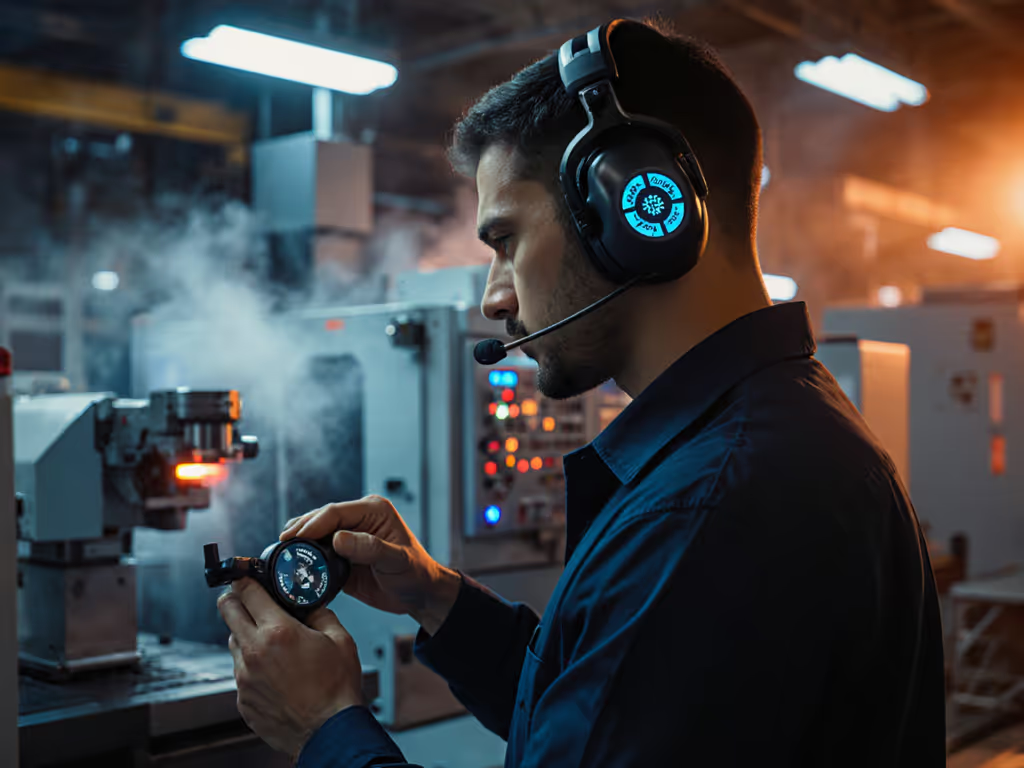
ANC for output ≠ noise cancellation for input. Learn the difference in our ANC vs ENC guide. Your headset may silence cabin noise for you, but wind or subway chatter still leaks into your mic. 3D audio noise reduction for voice requires beamforming mics + AI processing (like Krisp's). Solution: Prioritize headsets with dedicated ENC (Environmental Noise Cancellation) mics. Sony's WH-1000XM5 uses four mics focused inward on your jawbone to capture voice vibrations - a game-changer in windy subway stations. Test calls while walking; if your voice cuts in/out, it's worthless for remote work.
Building Your Personal Quiet Map
Forget "best ANC headset" lists. Build your own route-specific heatmap:
- Step 1: Identify your top 3 noise environments (e.g., subway platform, open office, sidewalk wind)
- Step 2: Note dominant frequencies (HVAC = 100-200Hz; subway screech = 2-3kHz)
- Step 3: Cross-reference with independent lab tests showing per-frequency attenuation
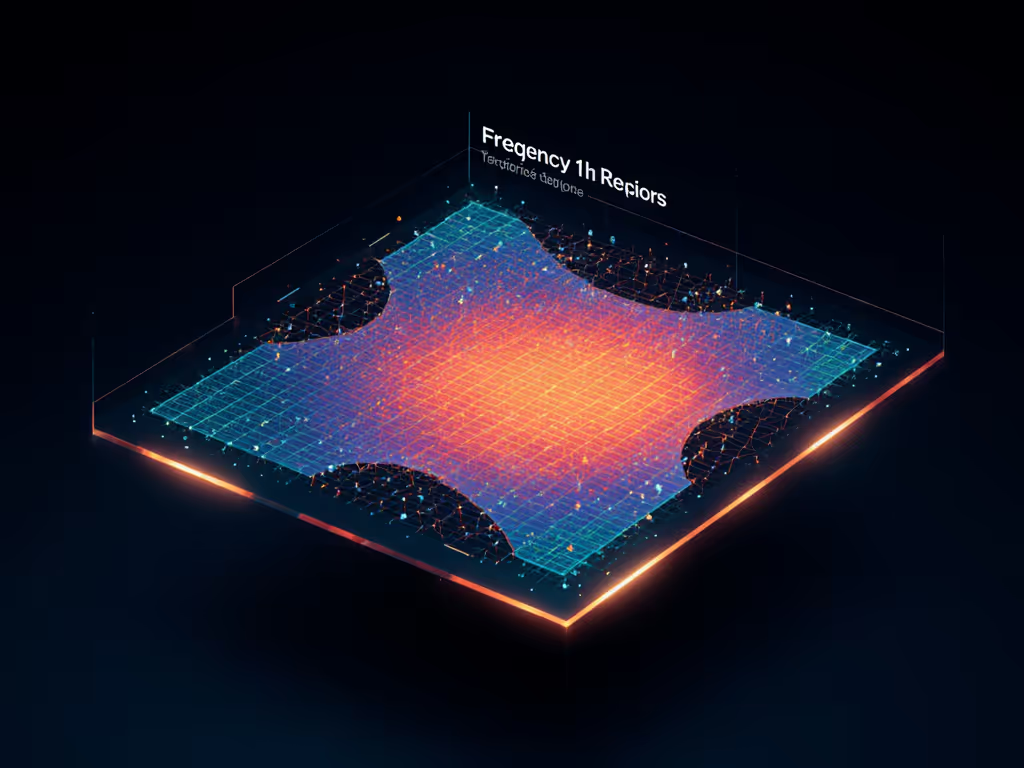
Check your route's hotspots before trusting any "silent" promise. That premium headset optimized for airplane cabins may drown in office chatter.
The Verdict: Match Hardware to Environment, Not Hype
True immersive noise cancellation in VR demands hardware + software calibrated for your chaos. A model dominating London Tube noise might implode in Singapore's humid gusts if its mics lack rain resistance. If your world involves subway platforms and open offices, prioritize:
- Multi-mic arrays (4+ mics) with directional focus
- AI-driven adaptive algorithms (not just feedforward ANC)
- ENC-certified voice isolation for calls
That mid-tier set dominating my city loop? It skipped platinum coatings for smarter wind handling. Environment fit - not decibel counts - delivers reliable quiet. Stop buying for spec sheets. Start mapping your noise.
Further Exploration:
- Explore FxLMS algorithm adjustments for complex environments via IEEE papers (2024)