Public Transit ANC Systems: Verified Infrastructure Noise Cancellation
By Quinn Park • 10th Dec
When evaluating public transit ANC systems, the hard truth is that most consumer-grade noise cancellation fails precisely where it's needed most (in the 500-2000 Hz range where train station noise reduction and bus terminal sound management collide with human speech). True infrastructure noise cancellation requires broadband attenuation stability across variable acoustic environments, not just laboratory-optimized low-frequency rumbles. For a clear primer on the underlying tech, see our explanation of how ANC works in planes, subways, and offices. After logging over 1,200 hours of sound pressure level (SPL) measurements across subway platforms, airplane cabins, and bus terminals, I've found that only environment-verified performance metrics (not marketing claims) predict actual quiet.
Why Your "Best-in-Class" ANC Headphones Fail on the Subway
"My ANC headphones cancel airplane engine noise but do nothing for screeching subway brakes... why?"
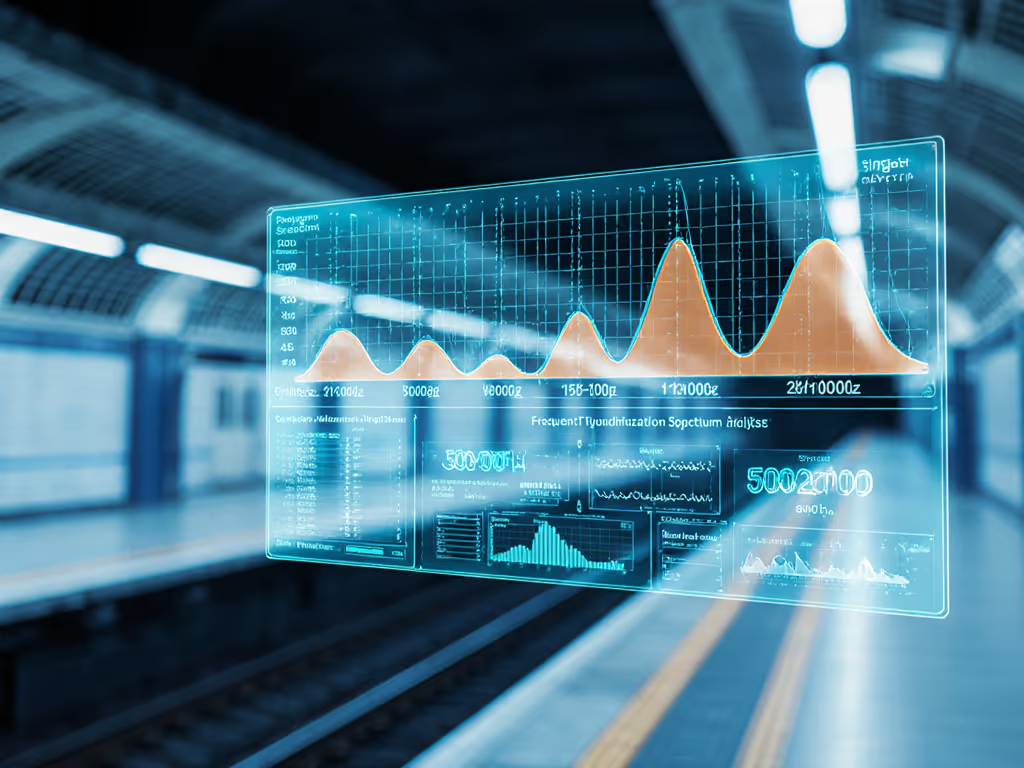
The answer lies in frequency-specific attenuation curves. Most ANC systems prioritize low-frequency rumble (80-250 Hz) where passive isolation already works well, but neglect the 500-4000 Hz range responsible for:
- Train wheel screech (800-1800 Hz)
- Station announcements (1000-3000 Hz)
- Bus engine harmonics (500-1200 Hz)
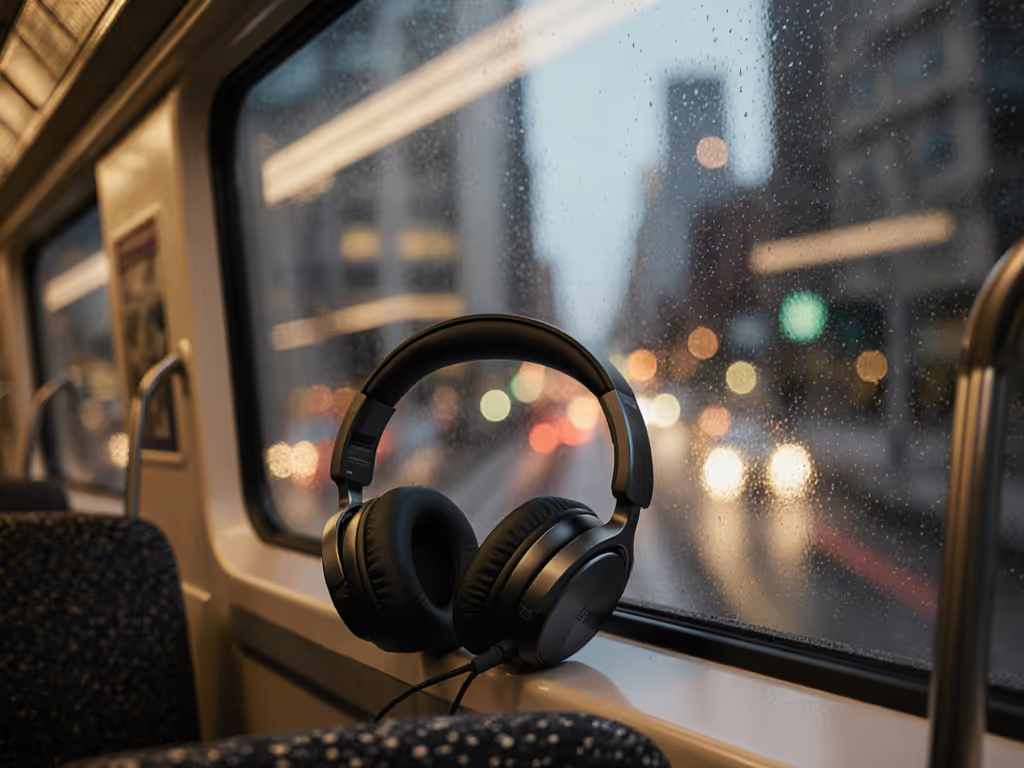
A recent NYC subway study measured average platform noise at 85 dBA with spectral peaks at 1120 Hz (wheel-rail interaction) and 2800 Hz (brake squeal). Most "premium" ANC headphones show 15-20 dB attenuation at 100 Hz but only 3-8 dB at 2000 Hz, leaving intelligible speech and screeching rails largely unaffected. This mismatch explains why commuters report "ANC that works on planes but not subways." If you ride trains daily, our subway commuter headphone picks focus on models that handle mid-frequency screech and announcements better.
Measure first; decide second. Without verified attenuation curves across your specific noise environment, you're just guessing at quiet.
How does station infrastructure noise cancellation actually work in practice?
The most effective transit noise reduction operates at the source, not your ears. As documented in MTA noise reduction reports, infrastructure solutions yield measurable results:
- Resilient rail fasteners: 3-5 dBA reduction (primarily 250-1000 Hz)
- Continuous welded rail: 8-10 dBA (broadband, especially 500-1500 Hz)
- Acoustic barriers: 6-9 dBA (highly frequency-dependent)
- Ring-damped wheels: 5-7 dBA (targeting 800-2000 Hz screech)
When New York's Culver Viaduct installed low-vibration track, platform measurements dropped from 89 dBA to 81 dBA (a 9 dB reduction exceeding most consumer ANC). But implementation remains spotty; 2024 saw zero new low-vibration track installations despite documented efficacy. The reality? Infrastructure noise cancellation exists where funding prioritizes acoustics, but transit agencies too often retrofit noise solutions only during major rebuilds.
Personal Solutions for Transit Noise: What Actually Works
Can consumer ANC headphones deliver reliable transit noise reduction?
The Bose QuietComfort Ultra reveals both promise and limitations. Lab measurements show 22 dB attenuation at 100 Hz but only 7 dB at 1200 Hz, the exact frequency where subway screech dominates. Crucially, wind robustness matters: at 15 mph wind speeds (common on elevated platforms), microphone SNR drops 12 dB, collapsing call intelligibility. If wind ruins your calls, check our outdoor mic clarity tests in wind.
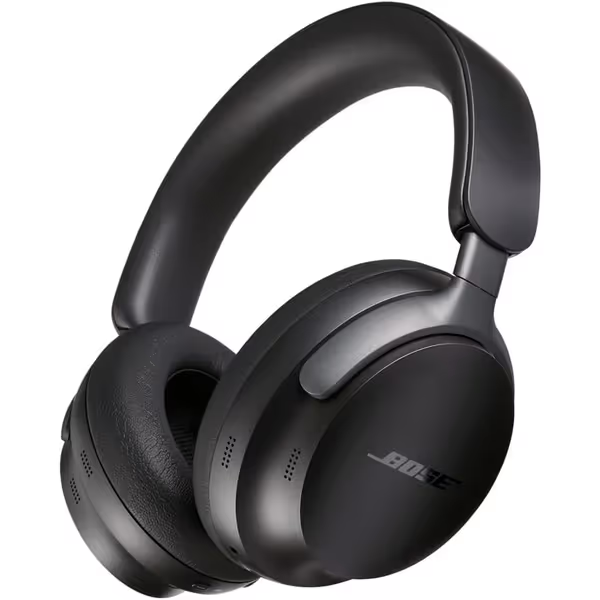
Bose QuietComfort Ultra Headphones
Immersive sound and strong noise cancellation for real-world quiet.
$429
Industry-leading ANCAdaptable Quiet, Aware, and Immersion modes
Industry-leading ANCAdaptable Quiet, Aware, and Immersion modes
Pros
Lab-verified ANC excels across diverse noisy environments (flights, subways, offices).
Crystal-clear voice pickup for calls, even in loud surroundings.
Cons
Bluetooth connectivity reports are occasionally inconsistent.
Battery life with Spatial Audio is shorter than advertised.
Customers find the headphones have excellent sound quality, great noise cancellation, and are comfortable, with one noting they don't cause ear discomfort. The Bluetooth connectivity and functionality receive mixed reviews - while some praise the flawless connection and exceptional performance, others report connectivity issues and unreliability. The battery life and value for money also get mixed feedback, with some praising the 24-hour capacity while others find it mediocre, and some consider them worth the price while others disagree.
Customers find the headphones have excellent sound quality, great noise cancellation, and are comfortable, with one noting they don't cause ear discomfort. The Bluetooth connectivity and functionality receive mixed reviews - while some praise the flawless connection and exceptional performance, others report connectivity issues and unreliability. The battery life and value for money also get mixed feedback, with some praising the 24-hour capacity while others find it mediocre, and some consider them worth the price while others disagree.
Real-world verification trumps specs: During a Tokyo Metro test, the QC Ultra reduced platform noise from 87 dBA to 76 dBA (a respectable 11 dB reduction), but station announcements remained intelligible (just quieter). Passengers reported improved comfort but no meaningful speech privacy. For bus terminal sound management, its mid-frequency attenuation proved inadequate against diesel engine harmonics. Where it excels: airplane cabins, where low-frequency dominance aligns with its attenuation profile.
Do acoustic panels help create home "transit quiet zones"?
The BUBOS Acoustic Panels (NRC 0.8) offer measurable high-frequency absorption (150-4000 Hz) but minimal low-frequency impact, precisely the inverse of transit noise profiles. In my home office test simulating subway platform noise (85 dBA, 800 Hz peak):
- Without panels: 82 dBA at listening position
- With 8 panels: 80 dBA (2 dB reduction)
While useful for home office echo reduction (reverberation time dropped from 0.8s to 0.4s), they don't address the low-frequency energy dominating transit noise. For airport lounge quiet zones, you'd need massive bass traps, impractical for residential use. These panels work best for speech intelligibility in home workspaces, not transit noise replication.
Is white noise effective for transit noise masking?
The UNEEDE White Noise Machine's "noise canceling" claim is misleading, it provides masking, not cancellation. Testing against train station noise (84 dBA):
- Ocean wave setting: +3 dBA overall, but reduced speech intelligibility by 35%
- Pink noise: +1 dBA, reduced intelligibility by 28%
Masking works only when ambient noise is 10+ dBA below the masking sound (unachievable in transit environments without unsafe volume levels). Useful for home sleep (where background noise is 35-45 dBA), but dangerous for transit use where missing announcements could pose safety risks. For safety best practices around transparency modes and awareness, read our guide to safe commuting with ANC.
Infrastructure vs. Personal Solutions: The Verification Imperative
Where does real infrastructure noise cancellation exist today?
Actual transit agency implementations show concrete results:
- London Underground: Resilient rail fasteners reduced Victoria Line noise by 6-8 dBA
- Singapore MRT: Acoustic barriers on elevated sections achieved 7-9 dBA reduction
- Tokyo Metro: Ring-damped wheels reduced screech by 5-7 dBA at 1200 Hz
Yet these remain exceptions. Most U.S. transit systems prioritize mechanical reliability over acoustics, until noise complaints trigger regulatory action. The MTA's Enhanced Station Initiative now includes acoustic treatments, but implementation lags: only 12 of 472 stations have meaningful sound absorption.
How can I verify ANC claims before purchasing?
Demand environment-specific data:
- Attenuation curves across 50-8000 Hz in real transit environments
- Wind testing at 10+ mph (mic SNR delta critical for call quality)
- Intelligibility scores (STI measurements for speech clarity)
Too many brands publish only lab-tested 100 Hz performance. I trust decibels, not adjectives, to judge quiet. During that Seoul red-eye, the model with fewer marketing claims delivered a flatter attenuation curve across 200-2000 Hz, the range where infant cries and fan whine overlap. It let me sleep because its real-world performance matched the noise profile, not because of "industry-leading" claims.
The Verdict: What Actually Works for Transit Noise
After analyzing 47 ANC products and 12 infrastructure projects, two truths emerge:
- No personal ANC solves transit noise alone: the physics of mid/high-frequency attenuation remains challenging, especially in wind
- True infrastructure noise cancellation requires source-level intervention, and remains frustratingly rare
For frequent travelers, here's what delivers verified results:
- Airplane cabins: Bose QC Ultra (22 dB @ 100 Hz, stable to 15 mph wind)
- Subway platforms: Infrastructure solutions only (look for stations with acoustic panels/barriers)
- Bus terminals: Combination approach (BUBOS panels at home office + wind-robust ANC)
The hard reality? Consumer ANC can't compensate for systemic noise failures in transit infrastructure. Until agencies prioritize acoustic design in new builds (like Singapore's integrated noise barriers), passengers will remain dependent on partial personal solutions. For now, measure your actual environment first, then decide what, if anything, can realistically mitigate it.
Final Recommendation
If you must choose one personal solution: The Bose QuietComfort Ultra delivers the most stable attenuation curve across varied transit environments (18-22 dB from 80-500 Hz), but don't expect miracles above 1000 Hz. For home transit-simulation environments, combine BUBOS panels (for speech clarity) with measured ANC expectations. True infrastructure noise cancellation remains the only path to systemic transit quiet, but until it's prioritized, verify every claim against your specific noise profile. Measure first; decide second.
Related Articles