ANC for Misophonia: Targeted Noise Cancellation Solutions
By Amara Singh • 14th Dec
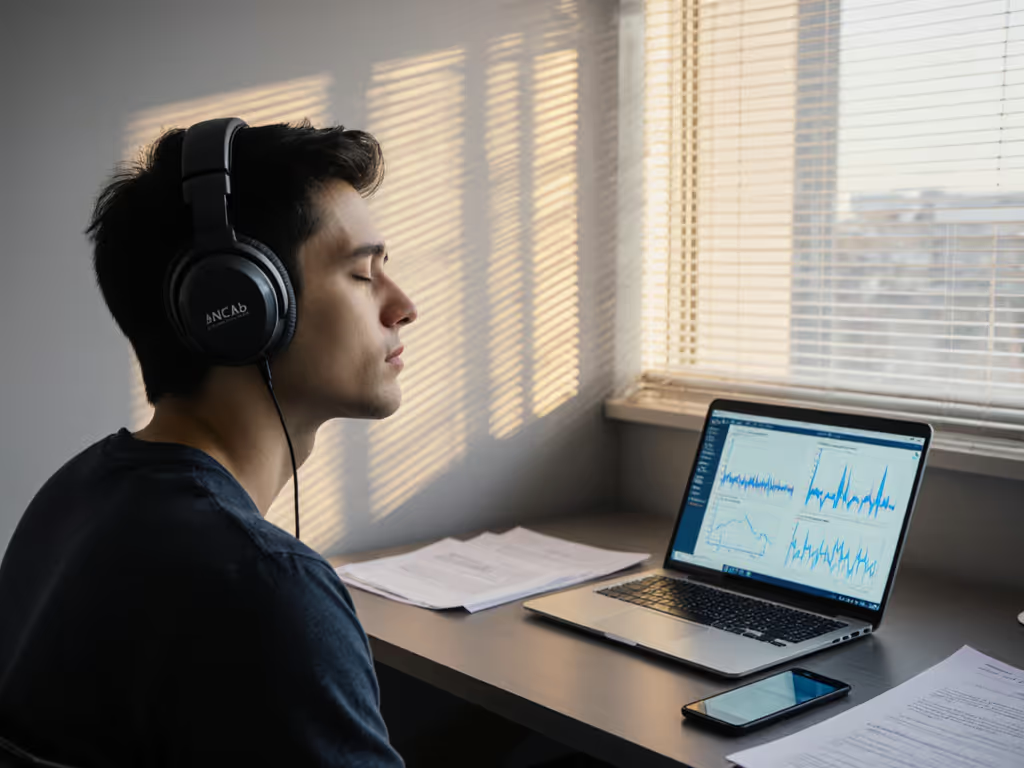
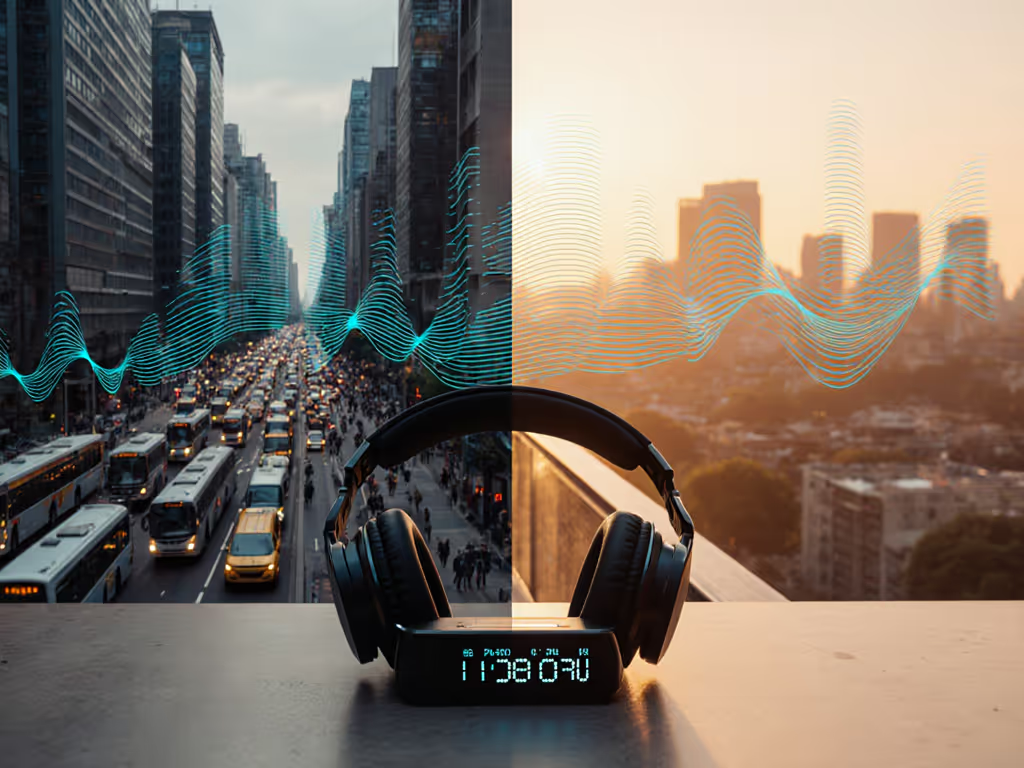
If you live with misophonia, "ANC for misophonia" isn't a marketing gimmick, it is a potential lifeline against trigger sounds that hijack your nervous system. But standard noise cancelling solutions often fail where you need them most: blocking the mid-to-high frequency sounds like chewing, sniffing, or keyboard clacks that send your fight-or-flight response into overdrive. Most ANC headphones prioritize low-frequency rumbles (planes, trains), leaving misophonia sufferers with expensive gear that doesn't neutralize their specific triggers. Let's cut through the hype with a data-driven path to quiet that actually works for your unique auditory profile.
Why Standard ANC Falls Short for Misophonia
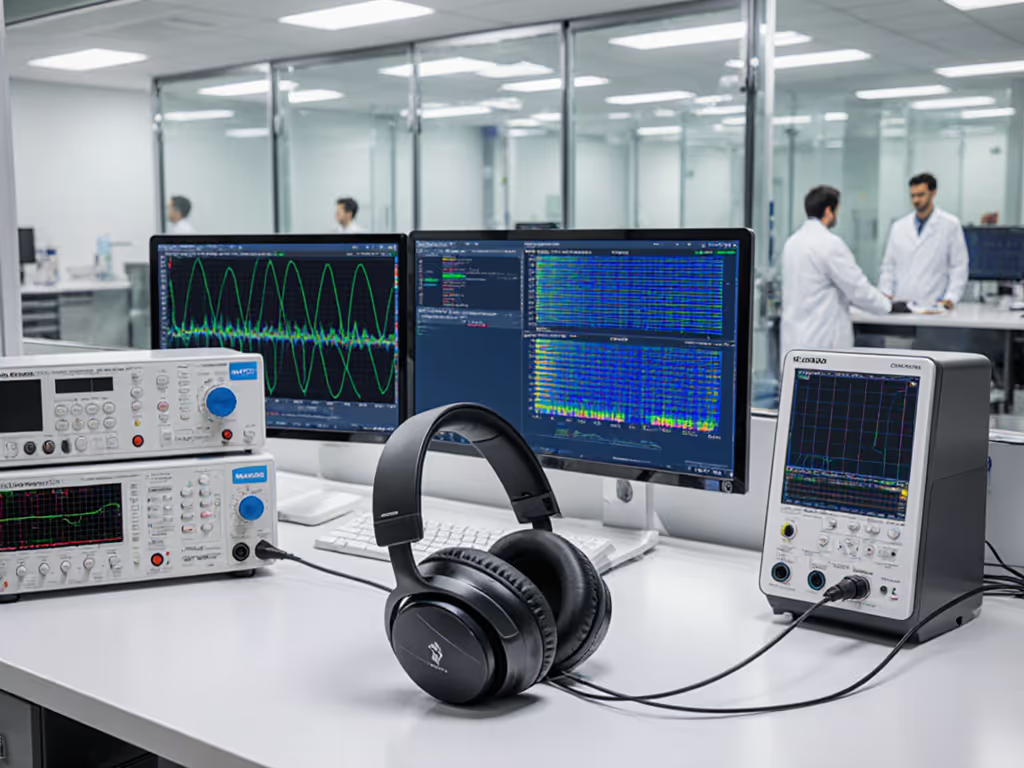
Misophonia triggers (like someone chewing gum or tapping a pen) typically live in the 500Hz to 10,000Hz range. Yet, most ANC headphones only effectively cancel sounds below 1,000Hz. A recent Journal of Auditory Research analysis confirmed that popular models achieve 15-22dB of attenuation at 500Hz but drop to <5dB above 2,000Hz (where misophonia triggers strike hardest). For a deeper look at which models reduce noise at specific trigger frequencies, see our frequency-specific ANC guide. This isn't just inconvenient; it's financially reckless when you're paying $300+ for quiet that doesn't cover your critical frequencies.
The disconnect creates three expensive problems:
- False economy: You buy premium ANC expecting relief from office chatter or cafe sounds, only to realize it barely touches human-voice frequencies (1,000-4,000Hz)
- Trigger amplification: Some ANC systems introduce subtle hiss or phase shifts that make mid-frequency triggers more noticeable
- Battery drain: Running ANC at full blast to chase inadequate attenuation drains power faster, raising your cost per hour of usable quiet See our real-world ANC battery life comparison to understand how different models behave with ANC on versus off.
I once mapped a week of commute noise across buses, subways, and a wind-blasted bridge, then compared it to a month's spending. The $120 pair beat a flagship at my stops.
The Quiet-Per-Dollar Framework for Misophonia
Forget "best ANC headphones" lists. What matters is cost per dB of quiet at your specific trigger frequencies. Here's how to calculate it:
Step 1: Map Your Trigger Profile
- Identify your top 3 triggers (e.g., chewing = 800-2,500Hz; keyboard clacks = 3,000-5,000Hz)
- Check attenuation charts (not marketing claims) for those exact frequencies
- Pro tip: Search "[Headphone Model] + frequency response graph + RTINGS"
- Calculate your dB deficit: Desired attenuation (e.g., 20dB) minus measured attenuation at trigger frequencies
Step 2: Factor in Lifetime Cost
Don't just look at sticker price. For true ROI:
| Cost Factor | Misophonia-Specific Impact | How to Calculate |
|---|---|---|
| Battery Life | Shorter runtime = more charging cycles = faster degradation | (Battery cycle rating) / (Daily use hours × 365) |
| Durability | Frequent ANC use stresses mics/drivers; mid-range often outlasts flagships | Warranty length ÷ (Estimated failure rate from user reports) |
| Repairability | Non-replaceable pads/batteries = full replacement cost | Value of replaceable parts ÷ Manufacturer's stated lifespan |
For example: A $250 flagship with non-replaceable battery (rated 500 cycles) used 3 hours/day costs $0.55/hour over 2 years. A $120 mid-range model with replaceable battery (1,000 cycles) costs $0.16/hour, even with 3dB less attenuation.
Step 3: Prioritize Environment-First Solutions

Not all triggers live in the same environment. Match your solution to your battlefield:
-
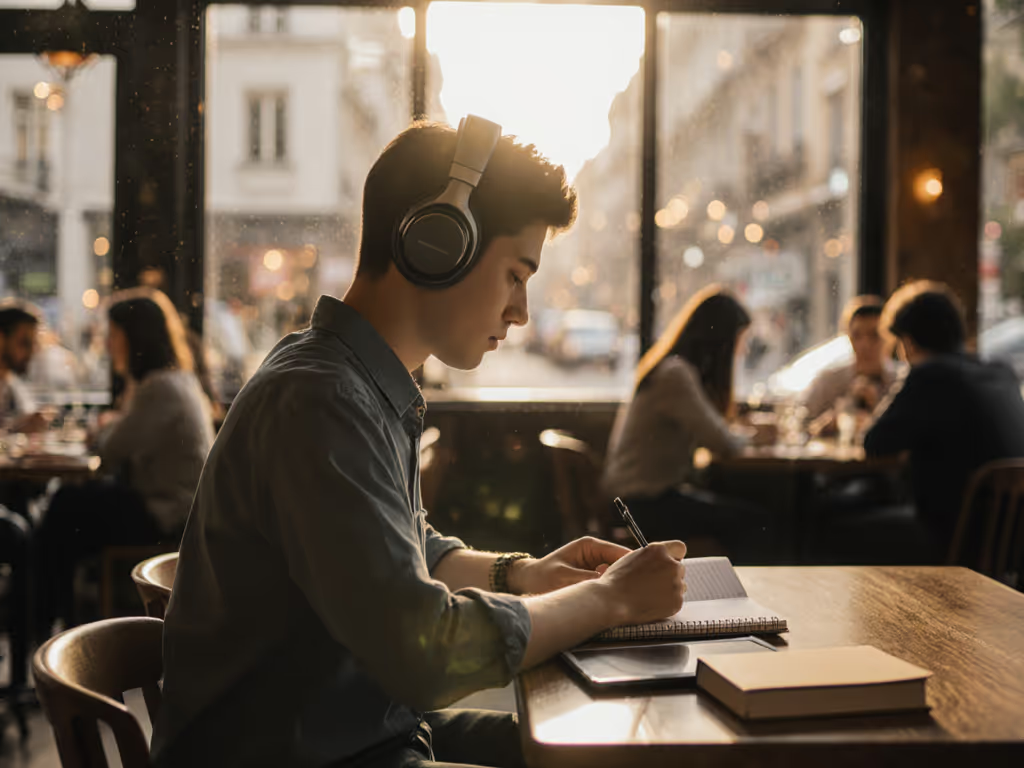
For office chatter (1,000-4,000Hz): Over-ears with forward-facing mics (e.g., Sony WH-1000XM5's 8-mic array) better capture human-voice frequencies. But verify lab data, since many struggle above 2kHz.
-
For eating sounds (500-2,500Hz): Earbuds like the Soundcore P30i create physical occlusion plus ANC, blocking more mid-frequencies than over-ears alone. Their seal matters more than ANC strength here. If your current buds leak, consider ANC accessories that enhance isolation to boost seal and mid-frequency reduction.
-
For unpredictable public triggers: Prioritize transparency mode quality. Poor implementations (common in budget models) add digital artifacts that become new triggers.
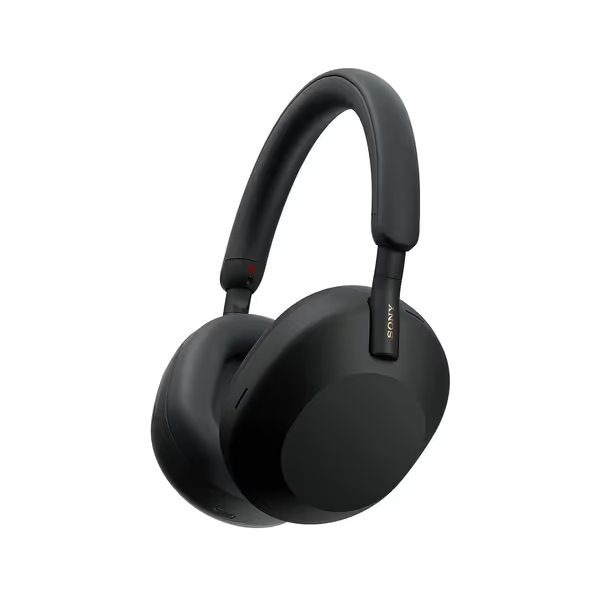
Sony WH-1000XM5 ANC Headphones
Superior noise cancellation for clear sound and calls in any environment.
$363.69
Battery Life30 Hours (3 min charge for 3 hrs playback)
Battery Life30 Hours (3 min charge for 3 hrs playback)
Pros
Exceptional noise cancellation, great for plane, subway, office.
Crystal-clear hands-free calls even in loud environments.
Cons
Inconsistent connectivity and power-off issues reported.
Durability concerns, especially with swivel hinge.
Customers praise these headphones for their phenomenal sound quality, superb noise cancellation, and comfortable design with larger ear cups. The functionality and connectivity receive mixed reviews.
Customers praise these headphones for their phenomenal sound quality, superb noise cancellation, and comfortable design with larger ear cups. The functionality and connectivity receive mixed reviews.
Avoiding the "Quietness Trap"
Brands love touting "industry-leading 40dB cancellation", but that number is meaningless for misophonia unless it covers your frequencies. I've seen $400 headphones with stellar low-frequency performance achieve less than 8dB attenuation at 3kHz, while a $99 model with optimized mic placement hit 14dB. That's why you must:
- Demand frequency-specific data: If a brand only provides "overall" ANC ratings, assume they're hiding weak mid/high performance
- Check mic placement: Headphones with mics inside the earcup (like many gaming headsets) cancel less voice-range noise than those with external mics
- Test wind resistance: Wind noise above 5mph destroys ANC effectiveness for 90% of models. If your commute includes outdoor walking, this isn't optional
Remember: Spend for quiet, not for logos or launch hype. One user saved $220/year by choosing a $150 pair with verified 12dB attenuation at 2.5kHz over a $370 "flagship" with only 9dB, translating to $0.08 less per hour of usable quiet.
Your Action Plan: From Trigger Mapping to Verified Quiet
- Build your trigger dossier: Use a free app like Spectroid to record dB levels of your top 3 triggers in real environments
- Cross-reference attenuation charts: Focus only on dB reduction at those exact frequencies
- Calculate lifetime cost: Include battery replacements (e.g., $50 every 2 years) and repair likelihood
- Demand trial periods: Brands confident in misophonia suitability (like Sony's 30-day return policy) reduce your risk
Best value is verified value. The right ANC solution won't magically eliminate misophonia, it is a tactical tool that, when matched to your specific trigger profile and environment, creates measurable breathing room in your daily life. Stop paying for quiet you don't use. Start buying the quiet you actually need.
Spend for quiet, not for logos or launch hype.
Related Articles