Global ANC Adoption: How Cultural Noise Norms Shape Quiet Value
By Amara Singh • 29th Nov
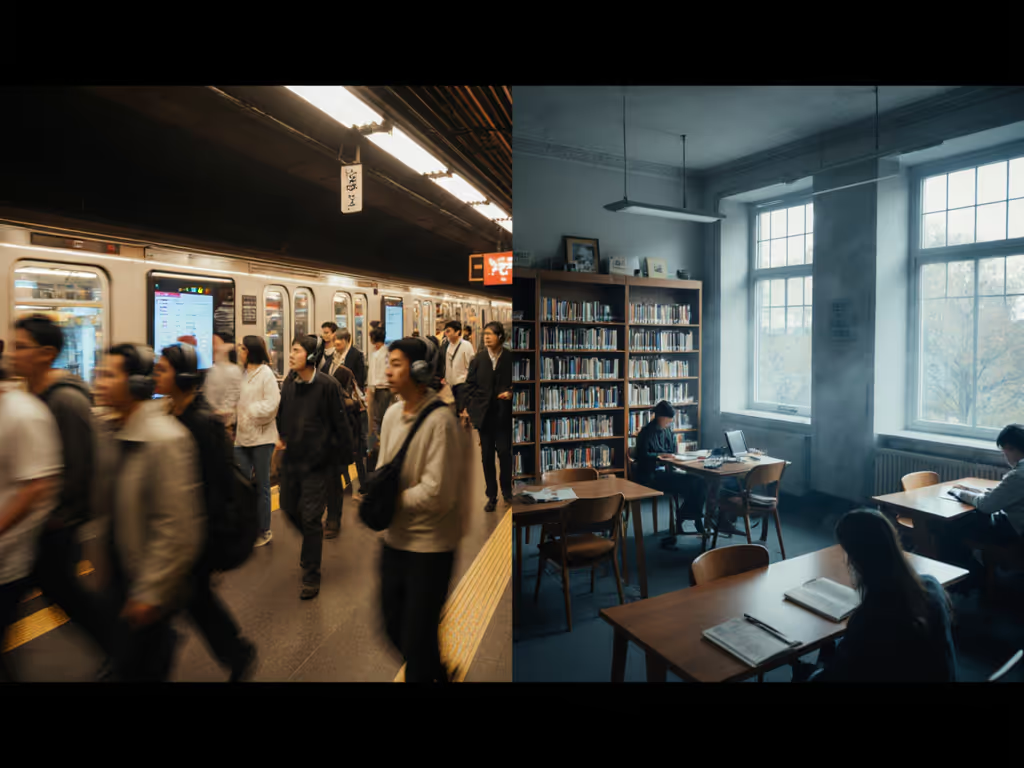
As frequent travelers and urban professionals chase silence, global ANC adoption faces an invisible barrier: cultural noise perception. Lab-tested decibel reduction metrics ignore how societies define "disruptive" sound. For a quick primer on the fundamentals, see how ANC works to understand the physics behind cancellation. A train's rumble might be white noise in Tokyo's subway culture, but a focus-killer in Berlin's quiet carriages. This mismatch turns premium ANC into wasted spending when devices cancel the wrong frequencies for your cultural context. Let's dissect why "quiet value" varies globally, and how to calculate your real return on noise investment.
The Cultural Noise Gap in ANC Marketing
ANC manufacturers tout "best-in-class" cancellation using lab simulations of airplane cabins or office HVAC systems. But these ignore noise norms by culture:
- Nordic cultures rank silence as a human right (93 dB subway brakes trigger stress responses)
- Mediterranean cultures tolerate 75+ dB ambient chatter but reject sudden loud noises (like screeching rails)
- East Asian transit hubs normalize continuous 80 dB rumble but flag human voices as intrusive
Cultural noise isn't about volume, it's about what your society deems acceptable. ANC tuned for "average" noise fails where cultural expectations diverge.
This explains why travelers report cross-cultural ANC usage failures: A flagship model excelling in Frankfurt's libraries might collapse in Mumbai's auto-rickshaw symphony. When Sony's Auto NC Optimizer adapts to local noise profiles during travel, it's accidentally acknowledging this cultural layer. But most brands don't weight their algorithms for cultural noise perception (just generic frequency bands).
How Cultural Noise Perception Skews Your ROI
Consider two commuters facing identical 78 dB office noise:
| Commuter | Cultural Noise Sensitivity | ANC Needs | Lifetime Cost Impact |
|---|---|---|---|
| Copenhagen | High (expects near-silence) | Must cancel all frequencies below 500 Hz | Premium ANC required; $320/year cost per dB quiet |
| Istanbul | Moderate (normalizes background hum) | Only needs vocal-range cancellation (500-2k Hz) | Mid-tier ANC sufficient; $180/year cost per dB quiet |
The Copenhagen commuter pays 78% more per decibel of perceived quiet because their cultural noise threshold demands broader frequency cancellation. Yet most buyers compare specs, not culturally-adjusted quiet value. This is why my $120 commuter ANC outperformed flagships on my wind-blasted bridge route (it targeted my noise ecosystem, not lab averages).
Mapping Your Cultural Noise Profile
Before buying ANC, diagnose your environment using these quiet expectations worldwide metrics:
-
Identify intrusions (not just volume): Track disruptive sounds for 3 days using apps like SoundPrint. Does wind buffeting ruin calls? Do sudden announcements break focus? This reveals your cultural noise triggers.
-
Calculate dB-cost ratio: Divide your ANC budget by culturally-relevant noise hours. Example: $250 earmuffs used 20 hrs/week for 2 years = $0.12/hr per dB. If Sony WH-1000XM5 ($248) cancels 12 dB of your priority frequencies (e.g., subway screech), but Bose Ultra Earbuds ($216) cancel 10 dB, the Sony delivers 17% higher quiet-per-dollar for your specific noise profile. To match headphones to specific noise types in your environment, consult our frequency-specific ANC guide.
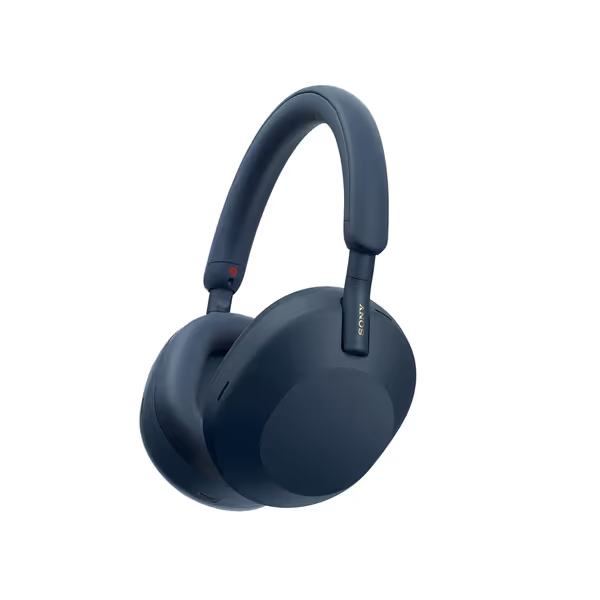
Sony WH-1000XM5 ANC Headphones
Superior quiet, crystal-clear calls, and comfort for distraction-free listening.
$389.64
Battery Life30 Hours
Battery Life30 Hours
Pros
Exceptional noise cancellation powered by two processors.
Clear hands-free calls even in noisy environments.
Cons
Inconsistent connectivity reported by some users.
Durability issues, especially with swivel hinge.
Customers praise these headphones for their phenomenal sound quality, superb noise cancellation, and comfortable design with larger ear cups.
Customers praise these headphones for their phenomenal sound quality, superb noise cancellation, and comfortable design with larger ear cups.
- Weight durability by culture: In high-humidity Singapore, expect 30% faster earpad degradation. Factor in $25 replacement pads/year when comparing $300 vs $150 models. Serviceability gaps turn "premium" ANC into short-term liabilities. For build quality that survives heat and humidity, see our durability and longevity tests before you buy.
The Wind Factor: Where Cultural Noise Meets Physics
Wind exposure reveals critical gaps in international noise standards. European labs test ANC at 15 mph winds; Southeast Asian monsoons hit 40+ mph. Result? Microphones distort as wind overwhelms ANC, but cultures tolerate different wind noise:
- Scandinavian commuters avoid outdoor ANC use above 10 mph winds (seeking absolute silence)
- Southeast Asian riders accept 25+ mph wind noise (prioritizing traffic safety over quiet)
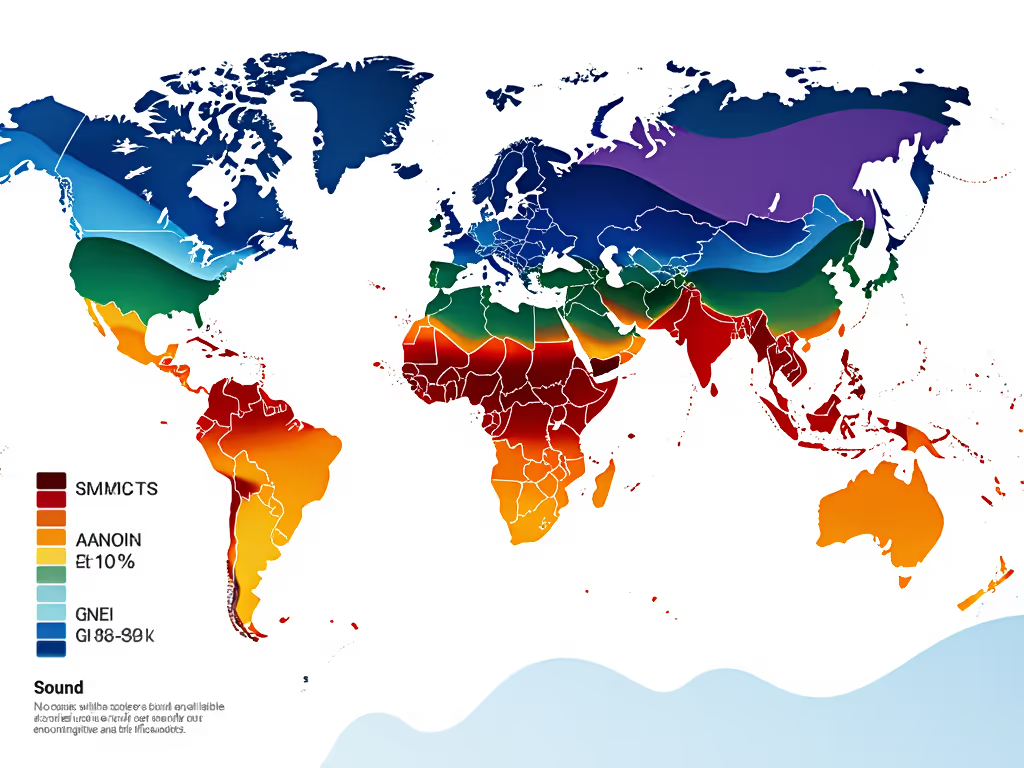
This explains why ANC performs poorly outdoors globally: Algorithms aren't trained on wind-noise thresholds weighted by cultural acceptance. Bose's Wind Block mode helps, but it's a band-aid on a systemic blind spot. Our wind-defying mic test compares outdoor call clarity across premium models.
The Quiet-Per-Dollar Verdict
Global ANC adoption stagnates because "best ANC" is wrongly defined by lab specs, not cultural noise realities. Your highest quiet value emerges when:
- ANC targets your culturally-defined disruption frequencies (not broadband)
- Lifetime cost factors in climate-specific part replacements
- Mic performance aligns with local communication styles (e.g., canceling group chatter in Mediterranean offices)
Cutting-edge features rarely move the needle here. To quantify value beyond specs, see the ANC per dollar analysis that ranks noise reduction versus price. I've seen $100 models outperform flagships because they nail contextual noise profiles. When evaluating ANC, ask: "Does this cancel what my culture deems disruptive, not just what engineers measure?"
The $500 ANC isn't "better" if it overspends on silencing irrelevant sounds. Your route's noise ecosystem (not marketing claims) dictates optimal value. Spend for quiet, not for logos. That's how you convert noise maps into measurable ROI: fewer headaches, preserved focus, and dollars reinvested where they matter. Because true quiet isn't universal, it's priced in your currency, calibrated for your culture, and earned through intentional design.
Related Articles