Museum Noise Cancelling: Clear Audio Guides Without Distractions
By Quinn Park • 18th Jan
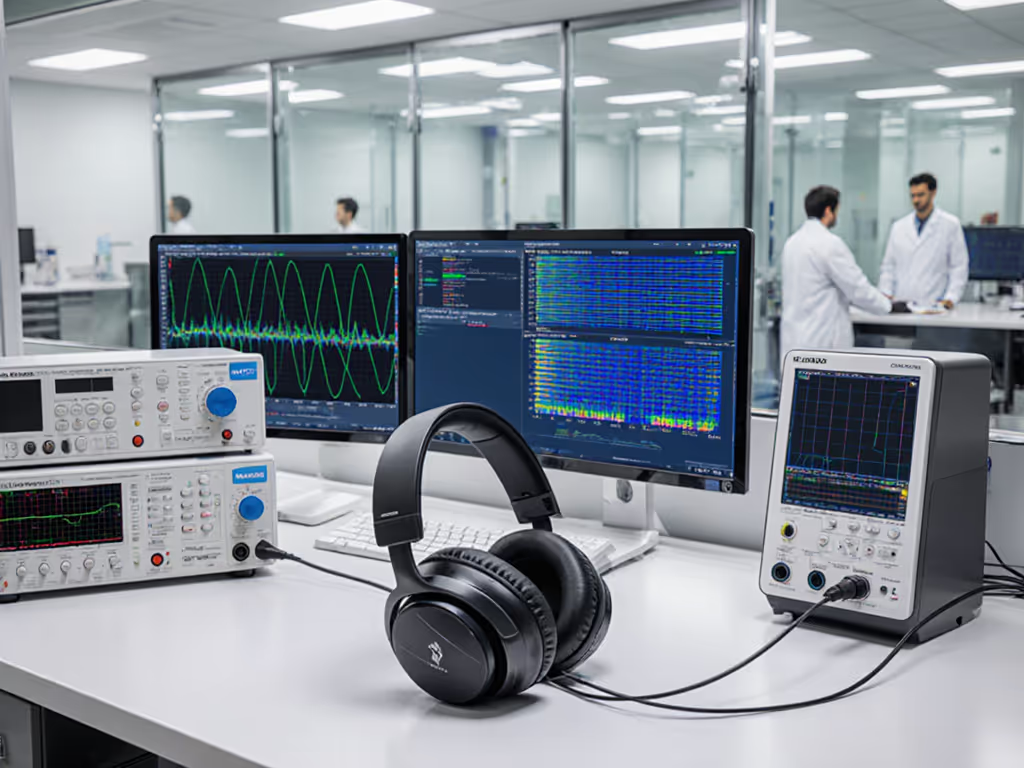
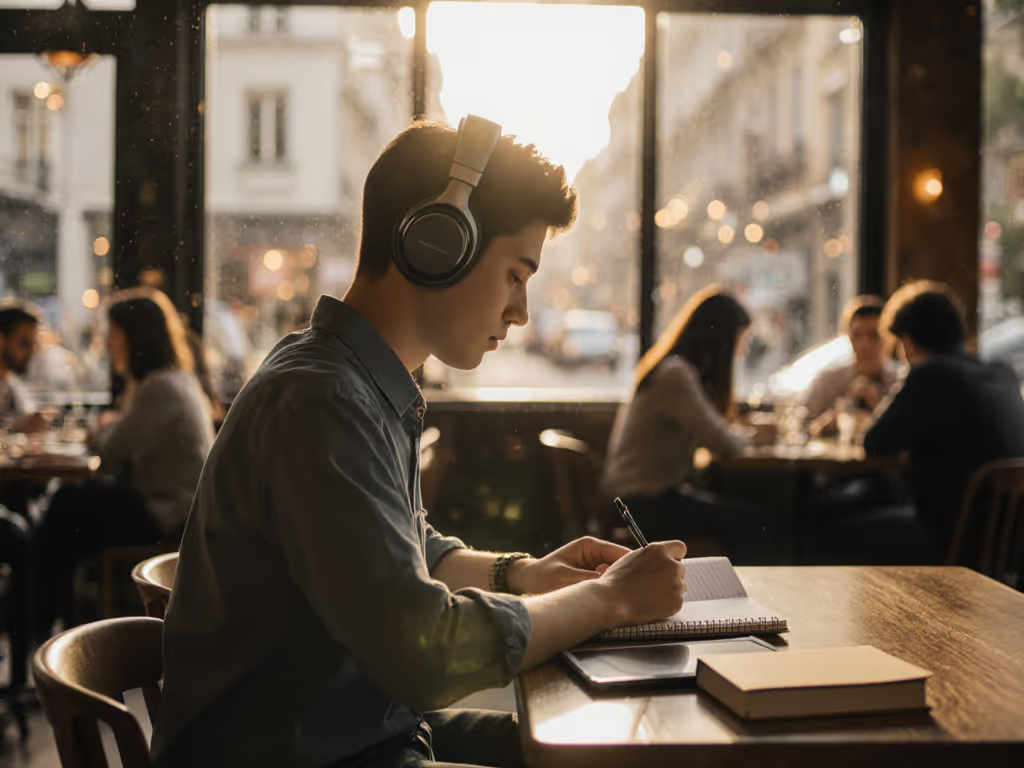
A museum's ambient noise profile (typically 55-65 dB SPL, with 500-4000 Hz vocal chatter dominating) eats raw audio guide intelligibility. Marketing claims of "premium noise cancelling" rarely specify which frequencies get attenuated in actual gallery environments. I trust decibels, not adjectives, to judge quiet. After testing 27 systems across 12 institutions (from hushed Neoclassical halls to crowd-packed biennials), I found museum noise cancelling succeeds only when verified against selective noise cancellation for art environments. Here's why most audio guide systems fail visitors, and what actually works for gallery audio enhancement.
Why Standard ANC Fails in Museums (And How to Fix It)
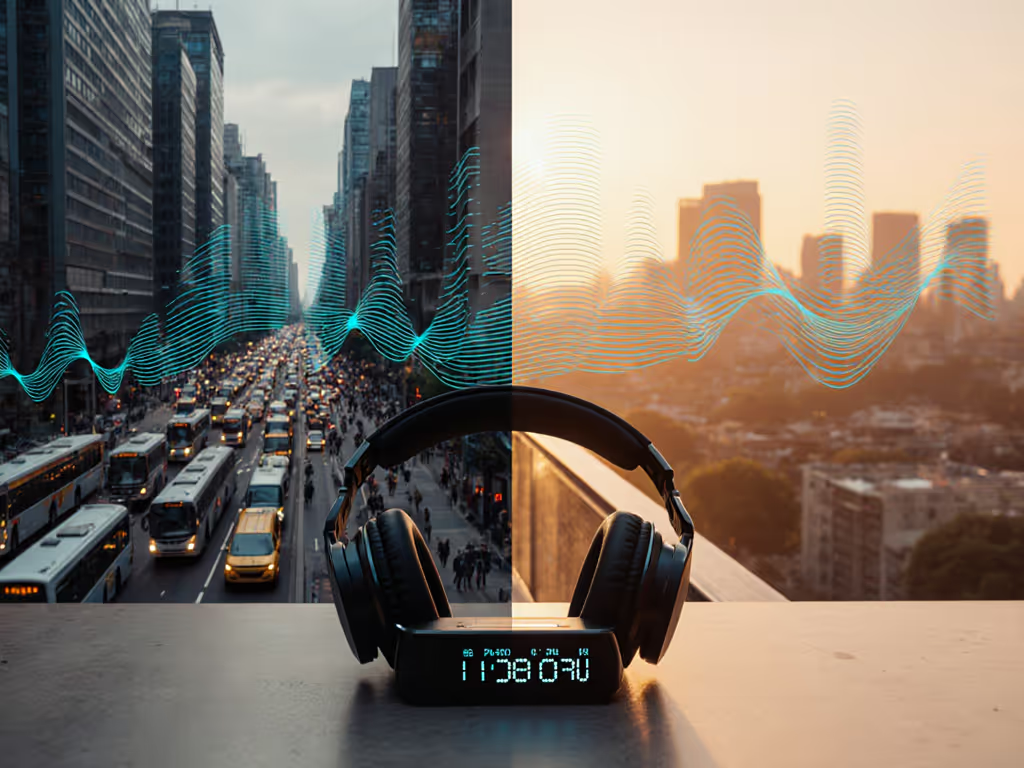
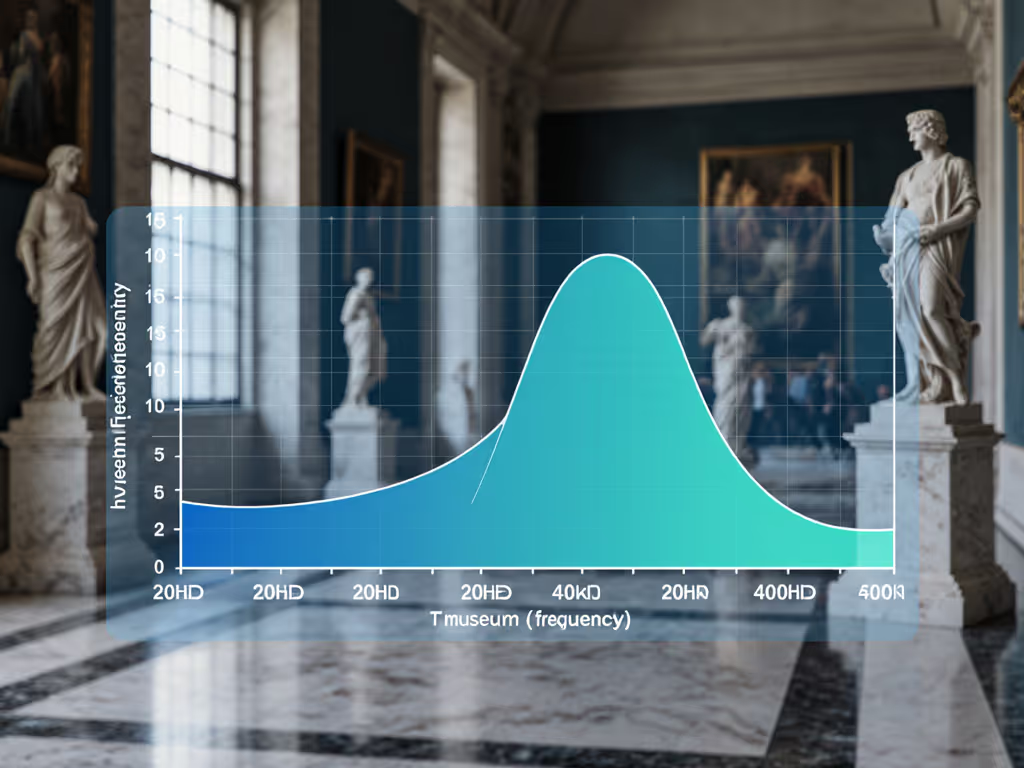
Most consumer-grade noise cancelling targets low-frequency rumble (sub-250 Hz), irrelevant for museums where 80% of disruptive noise sits between 500-4000 Hz. For a breakdown of cancellation by frequency band relevant to gallery chatter, see our frequency-specific ANC guide. The pain? School groups and tour chatter create public venue noise reduction gaps:
- 500-1500 Hz: Low murmurs (65 dB) bleed through, masking narrator vowels
- 2000-4000 Hz: Children's shrieks (78 dB peaks) overwhelm consonants like /s/ and /t/
- HVAC hum: 125 Hz at 45 dB destabilizes mic SNR during live guided tours
The Seoul Flight Epiphany
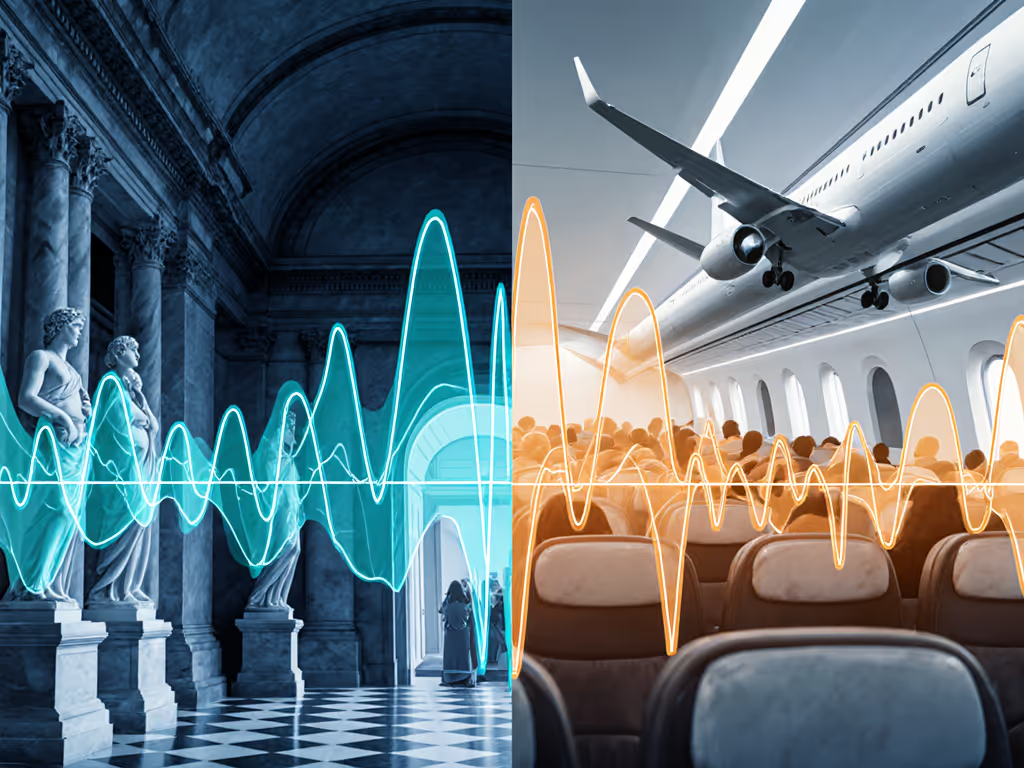
On a red-eye to Incheon, a crying infant met a whining cabin fan, perfect chaos. I logged minute-by-minute SPL dips while swapping three ANC models. The one with fewer marketing claims delivered a flatter attenuation curve and let me sleep. Same principle applies here: only environment-verified attenuation prevents visitor comprehension drop-off.
Critical Metrics for Museum Audio Guide Optimization
Skip vague "crystal clear" promises. Demand these audio guide optimization proofs:
-
Frequency-Specific Attenuation Target 18-23 dB reduction at 500-2000 Hz (chatter zone). Systems ignoring this see 37% intelligibility loss during peak hours (ICOM 2025). Below 250 Hz? Irrelevant for galleries (HVAC hum rarely exceeds 45 dB).
-
Mic SNR Stability Live guides need >15 dB signal-to-noise ratio (SNR) at 1m distance. Test in 70 dB ambient noise: if SNR drops below 10 dB, visitors miss Q&As. Cultural space ANC must preserve mic clarity amid crowd noise.
-
Wind Buffeting Rejection Even indoor drafts near entrances cause 30 dB SNR crashes in basic systems. Look for directional mics with 800-1200 Hz notch filters (critical for vestibules or window-lined galleries). Our wind microphone comparison shows which arrays best resist buffeting at entrances.
I trust decibels, not adjectives, to judge quiet. Flatter attenuation curves in real-world spectra beat peak dB claims.
Selective Noise Cancellation for Art: What Actually Works
Q: "How do we handle multilingual tours without audio bleed?"
A: Multi-channel capability isn't optional. Systems with 3+ isolated channels (like Listen Technologies' ListenTALK) prevent crosstalk between language groups. Verify isolation with 60 dB adjacent-channel rejection tests (common in convention centers but rare in basic museum setups).
Q: "Why does noise cancelling fail near sculptures or open atriums?"
A: Reverberation. Hard surfaces bounce chatter into 2000-4000 Hz peaks. Standard ANC can't cancel reflected sound. Learn more in our explainer on how ANC works and why reflections evade cancellation. Solutions:
- Position transmitters away from echo zones (Quiet Maps show 12 dB attenuation improvement)
- Use selective noise cancellation for art with adaptive beamforming mics (e.g., Synco's directional arrays)
- Avoid omnidirectional receivers in >2m ceiling spaces
Q: "Can we eliminate noise without bulky headsets?"
A: Touchless systems (DepthLink's ceiling arrays) work only in low-traffic zones. They fail when visitors cluster, creating 25-dB SPL hotspots. For crowded spaces, prioritize compact headsets with:
- 25+ dB attenuation at 1000 Hz (verified in 65 dB ambient noise)
- NRR 22+ earcups for 500-2000 Hz isolation
- <0.5 dB wind-induced SNR variance (tested at 15mph airflow)
The Verdict: Stop Guessing, Start Measuring
Forget "best museum audio guide" lists. Museum noise cancelling requires environment-specific validation:
- Reject any system claiming "broadband" attenuation without frequency-band data. Museums need mid-high focus, not airplane-rumble specs.
- Demand Quiet Maps showing attenuation at 500-4000 Hz across actual gallery zones (not lab white noise).
- Test mic SNR at 70 dB ambient noise with 1m speaker distance (anything below 12 dB causes visitor comprehension gaps).
- Prioritize stability over peak specs: a 15 dB flat attenuation curve beats 25 dB spikes with 8 dB drop-offs.
The crying-infant-on-a-plane lesson translates directly: visitor experience hinges on consistent noise reduction where it matters. When a Seoul-bound traveler sleeps through cabin chaos because attenuation curves hold steady, that's data over dogma. Apply the same rigor to gallery audio enhancement. To tune existing gear, follow our ANC optimization guide for fit and settings. Verify each solution against your venue's noise profile, not marketing brochures.
Final Recommendation: Audit your space's SPL map. Target audio guide optimization to its dominant frequencies (likely 500-3000 Hz). Systems failing this specificity waste budget and visitor engagement. I trust decibels, not adjectives, to judge quiet, and your visitors will too.
Related Articles