Prolonged ANC: Calmer Mind or Sensory Shift?
By Maya Takahashi • 3rd Dec

Introduction: Your Mind in the Noise War
We're constantly fighting noise pollution (from traffic rumble to office chatter), and active noise cancellation (ANC) has become our primary weapon. But what are the prolonged ANC psychological effects on our brains? Does long-term noise cancellation impact our mental clarity or create new dependencies? As someone who tests headphones on windy sidewalks and noisy subways, I've seen firsthand how the right ANC settings transform stress into focus. Technology should disappear so your focus can appear. When ANC works seamlessly, you forget it's there and simply feel calmer. Let's unpack the science behind ANC and mental performance through real-world FAQ insights.
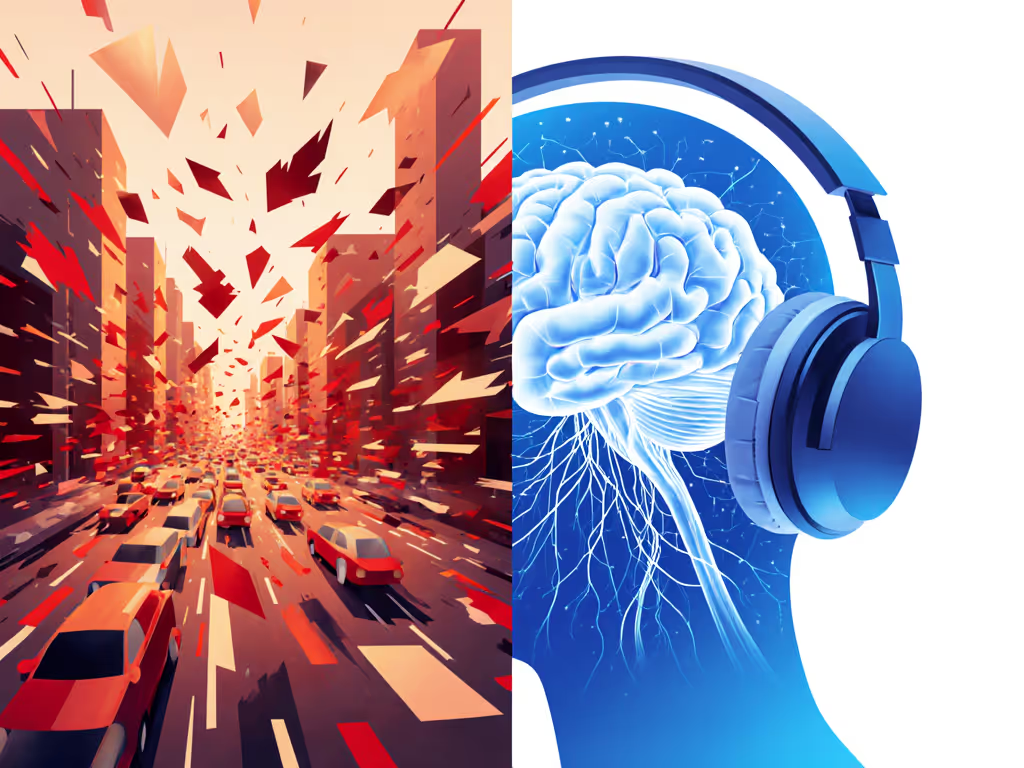
The Brain on Noise: What Research Shows
How does noise actually harm our mental state?
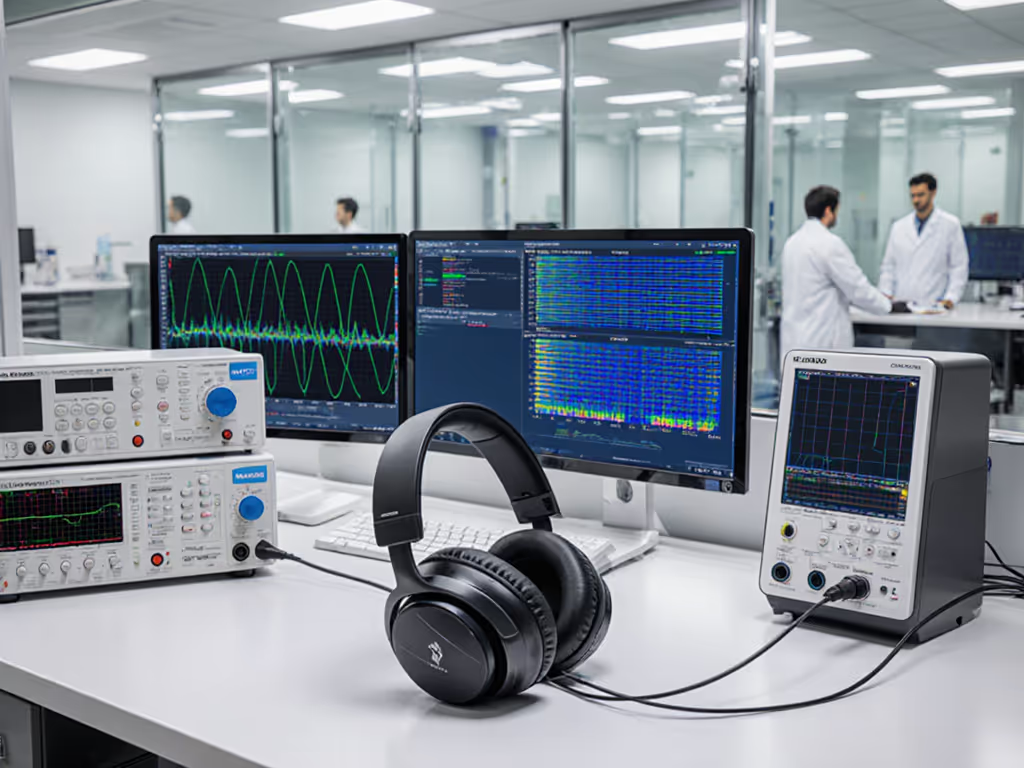
Noise isn't just annoying: it triggers measurable physiological stress. For a deeper look at the link between environmental noise, cognitive strain, and how ANC can help, see our guide on noise pollution and mental health. Research shows prolonged exposure to traffic noise increases susceptibility to depression and anxiety by activating neuroinflammation pathways in the brain. When your office HVAC hits 70 dBA, it silently increases your mental workload, and your prefrontal cortex works harder just to maintain focus. At 95 dBA (like subway platforms), studies confirm visual and auditory attention significantly drops. This isn't subjective; EEG measurements show increased alpha waves in occipital regions (indicating cognitive strain) alongside decreased beta waves in frontal areas (reduced alertness).
Key insight: Noise creates "learned helplessness" (the sense that you can't control your environment), which directly impacts mental health. I recently helped a neighbor who'd returned two headphones as 'broken' because they didn't cancel train noise during calls. We stepped through every mode on a noisy street and discovered buried app settings that disabled ANC specifically for calls. Clear interfaces matter, and buried toggles steal focus before you even realize it.
How ANC Changes Cognitive Load
Can ANC truly reduce mental fatigue?
Absolutely, but only when implemented correctly. Quality ANC systems target specific noise frequencies that trigger stress responses:
- Low-frequency cancellation (below 500Hz): Handles plane cabin rumble and traffic drones that elevate cortisol
- Mid-frequency targeting (500-2000Hz): Addresses HVAC hum that fragments concentration
- Wind-adaptive processing: Critical for outdoor reliability (many ANC systems fail here)
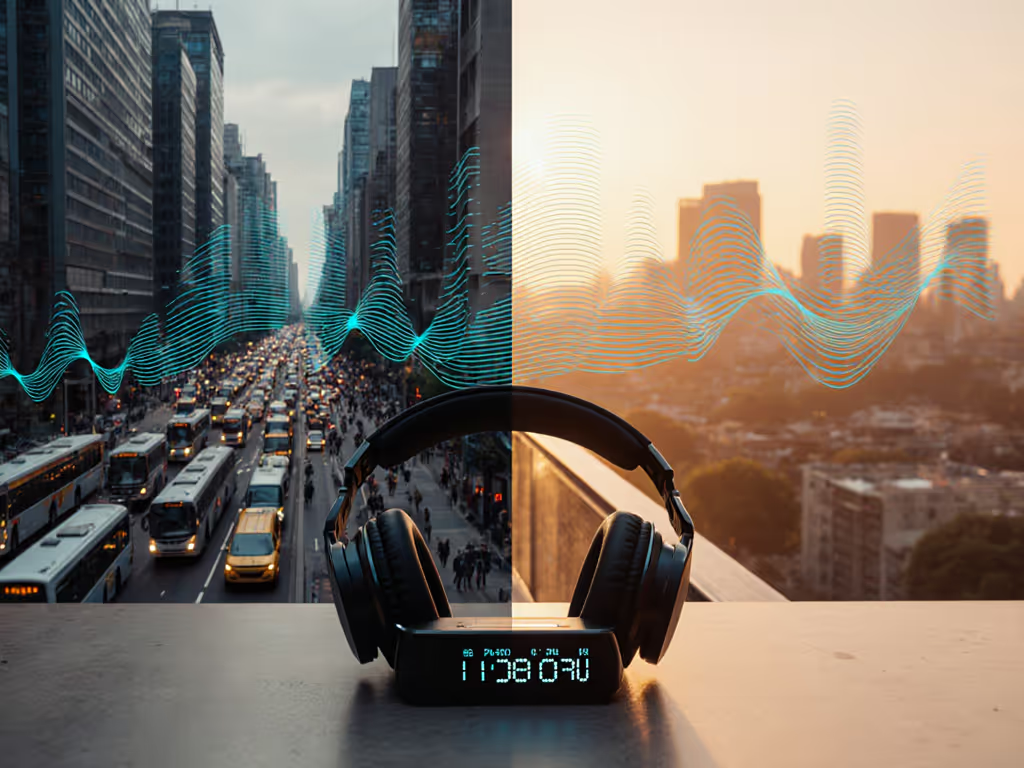
A properly configured system reduces cognitive overload by filtering environmental noise before your brain processes it as a threat. To choose the right headphones for your environment, consult our frequency-specific ANC guide. This means less cortisol release, lower blood pressure spikes, and preserved mental bandwidth for actual work. The right ANC creates a "quiet pocket" where your brain stops scanning for threats and starts focusing on what matters.
Do the 60-second sanity check first: Before trusting any ANC claim, test it in your actual environment, not lab demos. Open your office window to street noise and verify cancellation works where you live and work.
Can ANC Create Sensory Dependency?
Are we training our brains to need ANC?
This concerns many regular users, and the answer is nuanced. Unlike medication dependency, ANC doesn't chemically alter your brain. However, cognitive adaptation to ANC does occur:
- After weeks of using ANC in noisy environments, your brain optimizes for that filtered state
- Suddenly removing ANC feels jarring (not because you're "addicted," but because your sensory processing has adapted to reduced input)
Research shows this isn't harmful; it's actually efficient neural rewiring. Like adjusting to prescription glasses, your brain recalibrates to the new input level. The real risk comes from noise dependency effects when you use ANC excessively in already-quiet environments. This trains hypersensitivity to normal sounds, making ordinary office noise feel disruptive.
Action step: Set environment-specific profiles. In your ANC app:
- Create "Office" mode (70% cancellation for mid-frequencies)
- Save "Travel" mode (95% cancellation with wind compensation)
- Schedule "Recovery" mode (zero ANC) for 30 minutes after work
Maintaining Sound Awareness with ANC
How do I stay safe while canceling noise?
This is the #1 concern among commuters and city dwellers. I've lost count of how many users nearly walked into traffic because Awareness Mode failed. ANC and sound awareness must coexist through intentional design:
- Look for frequency-targeted transparency: Good systems let low frequencies through (traffic rumbles) while blocking mid/high frequencies (chatter)
- Test directional awareness: In park settings, verify you can still locate bird sounds or approaching footsteps
- Set automatic mode switching: Use location-based triggers (e.g., "When near subway stations, activate high-wind compensation")
During my street testing, I prioritize headphones that preserve spatial cues. The "whoosh" of passing cars matters more than canceling every sound. When ANC erases all environmental context, you lose embodied safety awareness. Learn safe practices and device settings in our ANC situational awareness guide.
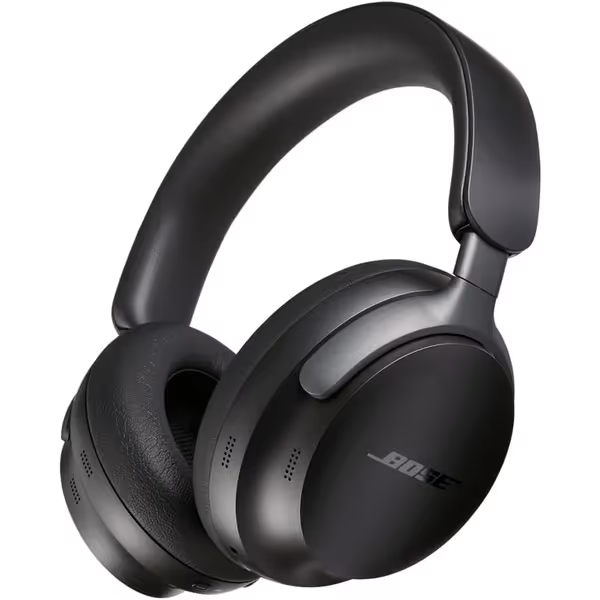
Bose QuietComfort Ultra Headphones
Immersive sound and strong noise cancellation for real-world quiet.
$429
Industry-leading ANCAdaptable Quiet, Aware, and Immersion modes
Industry-leading ANCAdaptable Quiet, Aware, and Immersion modes
Pros
Lab-verified ANC excels across diverse noisy environments (flights, subways, offices).
Crystal-clear voice pickup for calls, even in loud surroundings.
Cons
Bluetooth connectivity reports are occasionally inconsistent.
Battery life with Spatial Audio is shorter than advertised.
Customers find the headphones have excellent sound quality, great noise cancellation, and are comfortable, with one noting they don't cause ear discomfort. The Bluetooth connectivity and functionality receive mixed reviews - while some praise the flawless connection and exceptional performance, others report connectivity issues and unreliability. The battery life and value for money also get mixed feedback, with some praising the 24-hour capacity while others find it mediocre, and some consider them worth the price while others disagree.
Customers find the headphones have excellent sound quality, great noise cancellation, and are comfortable, with one noting they don't cause ear discomfort. The Bluetooth connectivity and functionality receive mixed reviews - while some praise the flawless connection and exceptional performance, others report connectivity issues and unreliability. The battery life and value for money also get mixed feedback, with some praising the 24-hour capacity while others find it mediocre, and some consider them worth the price while others disagree.
Your 3-Step Mindful ANC Routine
Practical setup for mental resilience
- Morning calibration: Before your workday begins
- Launch your headphone app
- Run Auto-NC Optimizer (Sony calls this feature; Bose uses CustomTune)
- Set base profile to "80% cancellation" (full ANC constantly drains mental resources)
- Midday reset: Combat cognitive drift
- Every 90 minutes, disable ANC for 5 minutes
- Focus on three distinct environmental sounds (HVAC, keyboard clicks, distant voices)
- Resets your sensory baseline to prevent adaptation drift
- Evening wind-down: Protect neural recovery
- Switch to "Nature Sound" profile 1 hour before bed
- Uses gentle white noise instead of full ANC
- Eases transition to natural sleep environment
This routine builds sensory processing with noise cancellation that supports (not replaces) your natural auditory awareness. For step-by-step tuning in real environments, follow our ANC optimization guide. The goal isn't permanent noise elimination, but strategic respite when your brain needs it most.

Technology should disappear so your focus can appear. When ANC works as intended, you don't notice the silence. You simply notice your thoughts becoming clearer, your reactions calmer, and your work flowing more smoothly. But if it adds friction, it steals your focus and time. By understanding these mechanisms, you're not just wearing headphones: you're curating your cognitive environment.
Do the 60-second sanity check first: Before your next important call, verify ANC settings haven't auto-switched. Nothing undermines confidence faster than realizing your 'noise-canceling' headphones were in Awareness Mode during a meeting.
Ready to explore deeper? Check peer-reviewed studies on noise pollution's impact on cognitive function through the National Institutes of Health database: search terms like "noise exposure cognitive performance EEG" yield actionable insights beyond marketing claims. Your calm mind is worth the research.
Related Articles