Noise Cancelling Headphones That Fit Over Hijabs
By Larsen Okoye • 2nd Sep
Quick answer
Traditional closed-back over-ear headphones are described as creating a physical seal. Separately, ANC provides active noise reduction—but no collected evidence shows how a model’s seal, comfort, or ANC performance changes when worn over a hijab or other head covering.
- Key distinction: ANC is generally better suited to steady, lower-frequency noise, while passive isolation helps with mid- and high-frequency sound.
- How to assess: When available for a model, use independent weight and clamping-force measurements as comparative context.
- Safe listening: A well-fitted ANC headphone may reduce the urge to raise volume.
Important: Headscarf-specific testing is absent, including evidence on fabrics, folds, pins, hair volume, cup placement, or clamp-force adjustments. ANC reduces noise; it does not guarantee silence.
Finding noise cancelling headphones that fit over hijabs is less about locating a label that promises "universal comfort" and more about separating what is known about noise control from what remains untested. Traditional closed-back over-ear headphones are described as creating a physical seal that provides physical isolation, while ANC is a separate active noise-reduction technology. There is no direct comparative evidence establishing which headphones reliably preserve fit, seal, comfort, or ANC performance over a hijab, turban, headscarf, or voluminous hairstyle.
That limitation matters. For a commuter, traveller, or open-office worker, a headphone that feels acceptable for ten minutes but creates pressure or requires higher volume by mid-afternoon is not a sustainable solution. The practical objective is comfort you forget, protection you feel, quiet you measure.
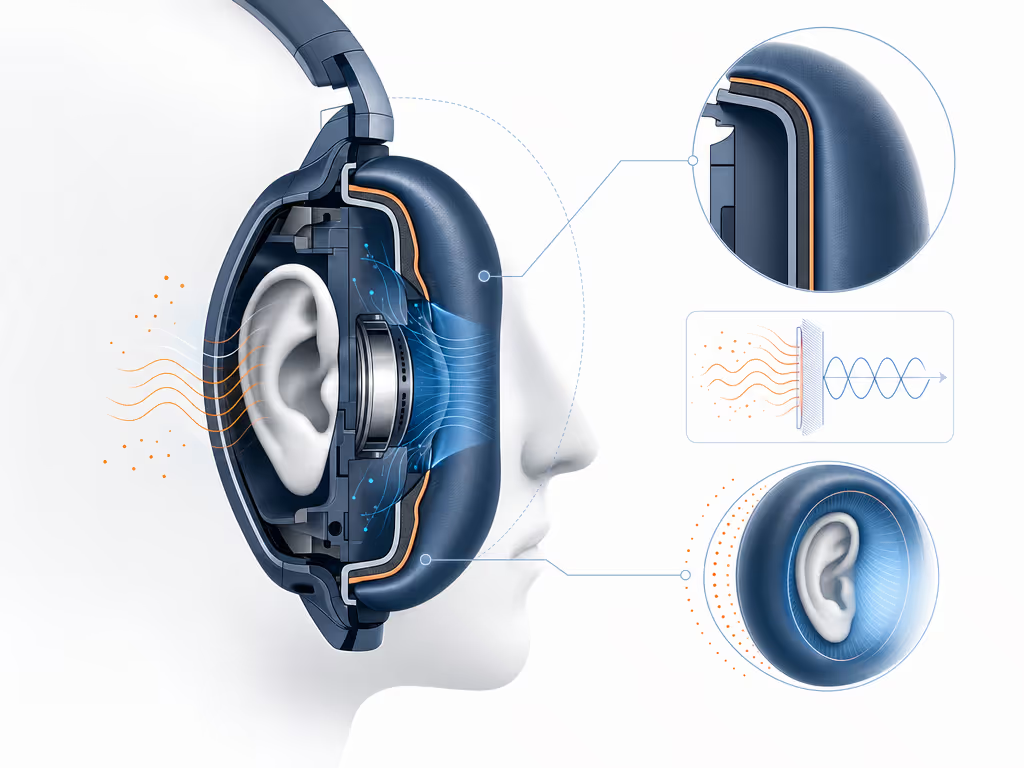
What Does "Fit" Actually Mean for ANC With a Headscarf?
The word fit combines two different questions:
- Physical comfort: how the headband, ear cups, weight, and clamping pressure feel during extended wear.
- Acoustic fit: how effectively the headphone’s closed ear cups limit outside sound before active processing begins.
These are related, but they are not identical. Active noise cancellation (ANC) uses microphones to pick up outside sound and generates phase-inverted sound intended to reduce that ambient noise. Passive isolation, by contrast, is the physical reduction of outside sound created by the headphone design itself.
For head-covering friendly headphones, the important unanswered question is how the material, construction, and arrangement of an individual covering affect that physical boundary around the ear. No collected evidence measures the effects of scarf fabric, folds, pins, undercaps, knots, or hair volume on seal quality, ANC effectiveness, leakage, or call microphones. It would therefore be inaccurate to promise that any particular over-ear model will perform as advertised when worn over fabric.
This is not a reflection on any head shape, wrapping practice, or hairstyle. It is simply a gap in headphone testing. The collected comfort-testing methodology does not include headscarf-specific participant testing.
Why Passive Isolation Still Matters
ANC is useful, but it is not a substitute for every aspect of physical isolation. Manufacturer explanations distinguish the roles this way:
- ANC is generally better suited to lower-frequency, steady background noise. This is relevant to the persistent rumble encountered in travel or ventilation-heavy spaces.
- Passive isolation is described as more effective against mid- to high-frequency noise. This is the physical barrier created by a closed design.
- Sudden sounds may remain audible. ANC is not a promise of silence; transient noise can occur too quickly for the system to counteract fully.
For someone trying to fit noise cancelling over hijab, this distinction is especially important. No collected evidence measures whether a head covering changes passive isolation or ANC performance. Headscarf-specific tests do not establish how ANC performs when headphones are worn over fabric.
ANC can reduce ambient noise, but sudden sounds may remain audible.
A quieter baseline can nevertheless be valuable because it may reduce the temptation to overpower the environment with volume. That is the more durable goal for focus: less competition between the audio and the room, rather than an unrealistic expectation of total isolation.
How Should You Evaluate Clamp Force and Long-Wear Comfort?
Comfort claims deserve more scrutiny than a product page can provide. Independent headphone-testing methodology can include objective measurements of weight and clamping force, alongside comfort testing with multiple people. That is a more useful starting point than treating "lightweight" or "all-day comfort" as universal conclusions.
For a head covering wearer, if independent clamp-force and weight measurements are available for a model, use them as comparative context, not as a guarantee. No model-specific measurements were collected here, and there is no evidence-based clamp-force range specifically for headphones over hijabs or turbans. No collected evidence establishes a safe or effective method for reducing clamp force. Avoid treating improvised reshaping or forceful modification as a fit solution.
A careful assessment asks the following questions instead:
Is the comfort evidence measurable?
Look for reviewers who report both headphone weight and clamping force, then explain how comfort was assessed across more than one wearer. No headscarf-specific testing was collected, so these measurements should be read as comparative context rather than head-covering-specific guidance.
Can you assess endurance, not just first impressions?
A short try-on often misses cumulative pressure. I learned this after an HVAC-heavy ten-hour office day: temple pressure and overboosted highs can quietly turn concentration into fatigue. The pair that serves you well is the one you can keep wearing without pressure becoming the day’s main signal.
Listening longer shouldn't mean straining against excess pressure, unstable fit, or the urge to keep raising the level.
Are Open-Ear Designs a Better Alternative?
Not if your central requirement is meaningful isolation or private listening in a shared setting. Open-ear earbuds are designed to rest outside, or near the entrance to, the ear rather than creating an ear-canal seal. That can preserve awareness of the environment, but it also creates a trade-off: sound can radiate outward and become more noticeable to nearby people as volume rises, particularly in quiet places.
Traditional closed-back over-ear headphones are designed to create a physical seal that helps limit incoming noise and retain sound in the ear cup. The collected evidence does not test how closed-back models seal when worn with head coverings.
Accordingly, open-ear designs should be considered an awareness-oriented category. The collected evidence does not establish them as a better-fitting workaround for wearing headphones over a hijab. For a broader comparison of open-ear and over-ear approaches, consider how each design balances awareness, comfort, and noise reduction. They solve a different problem and can leak audible sound in quiet environments where leakage is a concern.
What Is the Safest Way to Use ANC During Long Days?
A well-fitted noise-cancelling headphone can support safer listening by reducing the need to increase volume in a noisy environment. The World Health Organization advises keeping personal-device volume at no more than 60% of maximum. That percentage is a general guardrail, not a calibrated sound-pressure measurement: the real output varies with the device, headphone, and content.
The relationship between loudness and duration is equally important. WHO gives these examples:
- 80 dB: up to 40 hours per week can be safe.
- 90 dB: the stated safe duration falls to four hours per week.
The practical lesson is straightforward: louder listening shortens the safer exposure window sharply. ANC is most worthwhile when it lets you hear clearly at a lower setting, not when it encourages longer exposure at a high setting.
If sound feels abrasive or you notice yourself repeatedly increasing volume to overcome the room, pause the session and reconsider the environment, fit, or listening level. This is not an argument for tolerating discomfort in pursuit of a few additional decibels of cancellation. I will consistently trade a little theoretical isolation for steadier seal comfort and lower pressure over a full workday.
FAQ: Common Questions About Turban Compatible ANC and Headscarves
Do noise-cancelling headphones really work?
Yes, within defined limits. ANC uses microphones to listen to outside noise and generates phase-inverted sound intended to reduce ambient noise. It is generally described as more effective with lower-frequency, constant background sound than with sudden transient sounds. It reduces noise; it does not erase the outside world.
Can you still hear everything with ANC on?
Some external sound may still be audible, particularly sudden sounds. ANC is not designed to erase every outside sound.
Are noise-cancelling headphones worth buying?
They can be worthwhile when lower background noise helps you listen at a lower volume. Their value is less certain if their clamp, weight, or fit becomes uncomfortable, or if the use case demands full environmental awareness. ANC also requires battery power for its noise-cancelling function.
What are the disadvantages of noise-cancelling headphones?
The core limitations are battery dependence for ANC, incomplete reduction of sudden sounds, and the fact that active cancellation does not replace passive isolation. For open-ear alternatives, the lack of a seal can also mean audible sound leakage at higher volumes.
Further Exploration: Build a Fit-First Shortlist
Rather than searching for an unsupported claim that a model is universally hijab-compatible, build a shortlist around the evidence available for each candidate. If you find model-specific independent reporting, use weight and clamp-force figures as comparative context; no such results were collected here to rank closed-back over-ear designs.
Then judge success by the outcome that matters: lower-volume listening, manageable pressure, and focus that lasts through the commute, the meeting block, or the long flight. A good fit is not merely a headphone that stays on. It is one that makes sustained listening feel calmer, quieter, and more sustainable.
Related Articles